
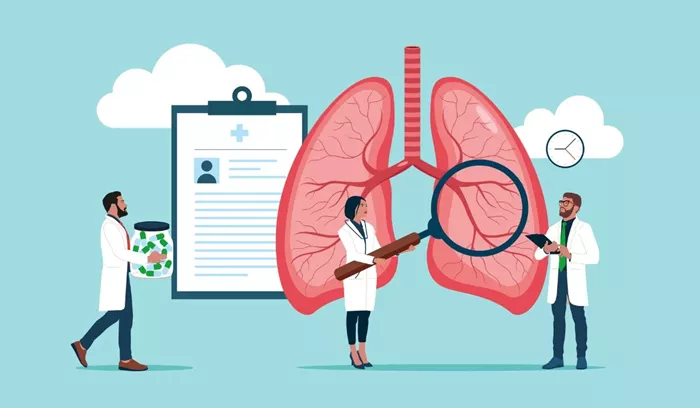
Your lungs do more than help you breathe—they offer important clues about your overall health. Every day, they are exposed to pollutants, allergens, and microbes, which can affect not only their function but the health of your heart, immune system, and even brain.
In May 2025, an international team of researchers studied how lung function changes over a lifetime. Analyzing data from 30,000 men and women, they found lung capacity peaks in the early to mid-20s, slightly earlier for women, and then gradually declines. Factors like smoking, pollution, and asthma can accelerate this decline.
Judith Garcia-Aymerich, a professor at the Barcelona Institute for Global Health, explains that maintaining strong lung function during your peak years increases resilience against chronic lung diseases and other health issues later in life.
Testing your lung capacity at home
While medical studies use advanced equipment, you can try a simple home test to estimate your lung capacity. You’ll need a large plastic bottle, water, a bucket or bathtub, and a length of rubber tubing:
- Pour 200ml (7fl oz) of water into the bottle and mark the level. Repeat until the bottle is full.
- Fill a bucket or tub with water and invert the bottle into it.
- Insert the tubing into the bottle neck and blow through it as hard as possible.
- Count the number of water lines displaced. Multiply by 200ml to estimate your vital lung capacity (FVC).
John Dickinson, head of the Exercise Respiratory Clinic at the University of Kent, notes that this measures your vital lung capacity, a predictor of overall health first described in the 1840s. Average healthy adults have an FVC between 3–5 liters, which naturally declines by about 0.2 liters per decade.
How lung function affects overall health
As we age, lung tissue loses elasticity, respiratory muscles weaken, and the rib cage becomes less flexible. Excessive decline can lead to shortness of breath and chronic obstructive pulmonary disease (COPD). But poor lung health also links to other conditions, including high blood pressure, metabolic disease, and cognitive decline.
Dawn Bowdish, a professor at McMaster University, explains that lungs influence the lung-immune axis, where immune cells in the lungs help fight infection and clear pollutants. Inflammation in the lungs can affect the whole body, contributing to chronic conditions.
Additional at-home breathing test
Another simple test is your resting breathing frequency:
- Take a full breath in.
- Exhale slowly and count the seconds until you need to breathe in again.
- A healthy person should exhale for at least 11 seconds.
Professional lung testing
For accurate results, doctors use a spirometer to measure FVC and forced expiratory volume (FEV1). These metrics provide a complete picture of lung health and airflow. Dickinson recommends clinical testing every 10 years, or sooner if you experience unusual breathlessness.
Improving and protecting your lung health
Maintaining healthy lungs helps you stay disease-free longer. Strategies include:
- Regular exercise to strengthen respiratory muscles and reduce inflammation.
- Reducing salt intake and eating foods rich in antioxidants, vitamins C and E, and fish oils.
- Quitting smoking and vaping to avoid harmful chemicals.
- Maintaining a healthy weight to prevent abdominal fat from limiting lung expansion.
- Inspiratory muscle training (IMT) with devices like Powerbreathe, which improves diaphragm and intercostal muscle strength.
- Singing or playing wind instruments, which can enhance control and endurance of respiratory muscles.
Whether through structured exercises, musical training, or daily habits, supporting your lungs strengthens your body’s resilience—one breath at a time.
Suggested Titles
- Lung Health Made Simple: Home Tests and Tips
- Boost Your Lungs: Easy Ways to Stay Healthy
YOU MAY ALSO LIKE
China Study Tests Pig Lung Transplant in Human for Nine Days
Allergic Rhinitis Linked to Reduced Lung Cancer Risk, Study Finds
Ultra-Processed Foods Linked to Higher Risk of Lung Cancer, Study Warns
