
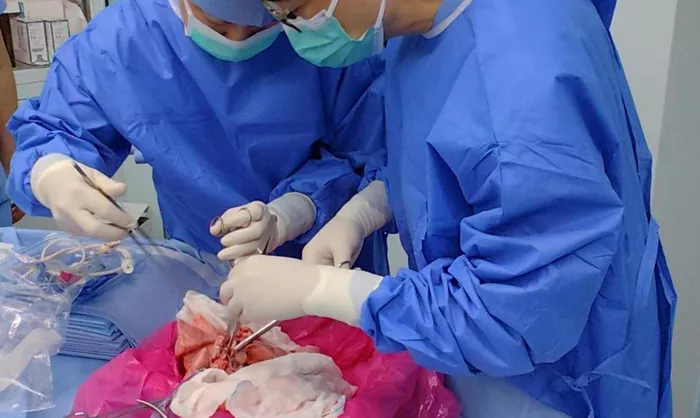
Doctors in China have transplanted a genetically modified pig lung into a man, where it functioned for nine days before being rejected, according to a study published this week in Nature Medicine.
The experimental surgery was performed at the First Affiliated Hospital of Guangzhou Medical University on a 39-year-old man who had been declared brain-dead after a hemorrhage. His family consented to the procedure, CNN reported.
This marks the first known attempt to transplant a pig lung into a human. While scientists view the study as a promising step, experts caution that it may take years before xenotransplantation—the use of animal organs in people—becomes a viable option for patients awaiting lung transplants.
The donor pig lung carried six genetic modifications to reduce the risk of rejection. The animal was raised in a sterile, highly controlled environment. Doctors also administered drugs to lower the patient’s risk of infection and rejection.
Initially, the lung showed no signs of rejection. However, within a day, the patient developed severe swelling due to fluid buildup, likely caused by blood flow problems. Although some improvement followed, doctors eventually observed organ rejection, and the procedure was stopped at the family’s request.
“Although this study demonstrates the feasibility of pig-to-human lung xenotransplantation, substantial challenges relating to organ rejection and infection remain,” the researchers wrote.
The shortage of donor organs remains a global crisis. In the United States alone, more than 103,000 people were on the national transplant waiting list last fall, while fewer than 48,000 transplants were performed in 2024. On average, 13 patients die each day while waiting.
Pig heart valves have been used successfully in humans for decades, and recent studies have advanced the use of genetically modified pig kidneys and hearts. Lungs, however, present unique hurdles because they are constantly exposed to bacteria and viruses and play a central role in immune defense.
Some researchers are also exploring alternative methods, including using pig lungs as biological “scaffolds,” replacing pig cells with human stem cells to reduce rejection risk.
Experts caution that while the study demonstrates potential, the field is still in its earliest stages.
“We’ll learn something from this, but I’m not fully convinced that this opens the doors to large-scale trials,” said Dr. Ankit Bharat, chief of thoracic surgery at Northwestern Medicine in Chicago.
Dr. Adam Griesemer, a transplant surgeon at NYU Langone in New York City, echoed that sentiment. “Nobody would sign up for a nine-day lung transplant,” he said.
For now, researchers say pig lung transplantation remains experimental but holds long-term promise in addressing the global organ shortage.
