
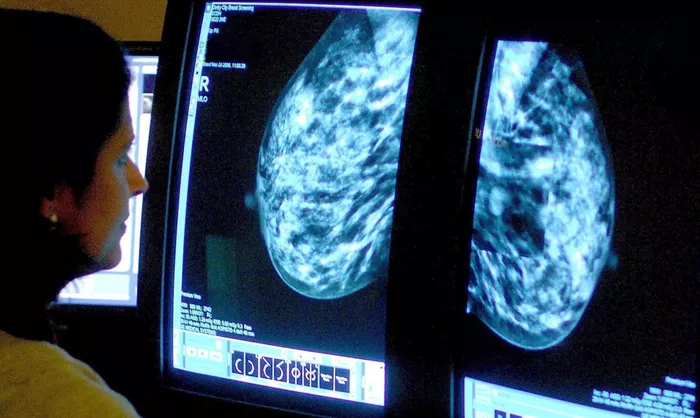
Artificial intelligence is detecting breast tumors earlier and more accurately in the Dutch breast cancer screening program, allowing for earlier treatment and potentially saving lives.
Researchers from Radboud University Medical Center demonstrated these findings in a study published in The Lancet Digital Health. In addition to improving detection, AI could reduce radiologists’ workload and save millions of euros annually.
Previous studies in Sweden had shown that AI identifies breast cancer on mammograms more effectively than radiologists and can serve as a reliable second reviewer. The new Dutch study confirms that AI can similarly replace the second radiologist in the Netherlands’ screening program, detecting more tumors at an earlier, clinically significant stage.
AI Outperforms Traditional Double-Reading
The research team, led by breast radiologist Ritse Mann of Radboudumc, analyzed 42,000 mammograms from the Utrecht region’s screening program. Traditionally, two radiologists review each scan. In this study, AI developed by ScreenPoint Medical was added to the process, and patients were followed for nearly four and a half years.
The results showed that a single radiologist working with AI detected more tumors than two radiologists alone. Tumors were also identified at an earlier stage. PhD candidate Suzanne van Winkel explained, “Sometimes AI identifies a tumor that radiologists do not yet recognize.
While initially flagged as a false positive, these often appear in later scans, meaning AI was correct earlier. By the time a radiologist flags the tumor, it may already be a larger invasive growth that requires urgent treatment.”
Replacing the Second Radiologist
In Sweden, AI has already replaced the second radiologist in breast cancer screening, with a human stepping in only when the AI expresses uncertainty. Mann noted, “Radiologists working with AI detect more tumors without significantly increasing unnecessary follow-ups.”
The Dutch study shows similar promise. Implementing AI to replace the second radiologist could save millions of euros annually. However, AI is not yet in use across the Netherlands.
Mann explained, “In Sweden, screening is organized regionally, making AI adoption easier. In the Netherlands, the national structure and current IT infrastructure present logistical challenges, requiring funding and upgrades before AI can be widely implemented.”
YOU MAY ALSO LIKE
Study Link Between Persistent Fatigue and Inflammation in Breast Cancer Survivors
Exercise Shown to Release Proteins That Slow Breast Cancer Growth
