
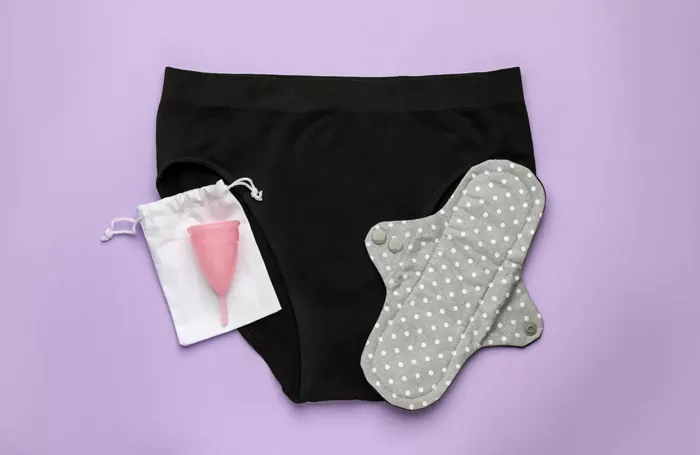
Menstrual cups and underwear, widely promoted as eco-friendly alternatives to disposable pads and tampons, may contain harmful “forever chemicals” known as PFAS, according to new research.
PFAS, or per- and polyfluoroalkyl substances, are synthetic chemicals notorious for their persistence in the environment—they do not break down, hence the nickname “forever chemicals.” These substances pose significant health risks, including cancer, immune system disruption, and reduced vaccine efficacy.
Toxicologist Marike Kolossa-Gehring warned, “PFAS can affect fertility, sperm quality, and even fetal development.” Additionally, PFAS exposure has been linked to thyroid disorders and hypertension.
A research team from the University of Notre Dame, led by Alyssa Wicks and Graham F. Peaslee, tested 59 reusable menstrual products from North America, South America, and Europe.
Their analysis revealed that nearly one-third of menstrual cups, underwear, and reusable pads contained PFAS. In some cases, levels were high enough to confirm that PFAS were intentionally used in manufacturing, despite the availability of safer alternatives.
“It’s not necessary to use PFAS in these products,” said Peaslee, a physicist and professor emeritus. “Many PFAS-free products sell just as well.”
PFAS contamination poses risks via two main pathways. First, direct absorption through the skin during use—where as little as 1 to 50 percent of PFAS in a product may penetrate the body. Second, environmental contamination occurs when discarded products release PFAS into water systems, eventually entering drinking water and the food chain.
While reusable menstrual products are marketed as environmentally friendly due to reduced waste, the presence of persistent chemicals undermines these benefits. PFAS are found in a wide array of consumer goods, from water-resistant clothing and food packaging to cosmetics.
The researchers aim to increase public and industry awareness of PFAS contamination in menstrual products. They refrained from naming specific brands to avoid potential legal repercussions in the US.
Peaslee believes eliminating PFAS from these products is economically feasible since PFAS materials are costly. He emphasizes consumer influence as the critical driver for change: “If consumers demand PFAS-free products, manufacturers will respond and proudly advertise their safety. No company wants legal trouble.”
READ MORE
