
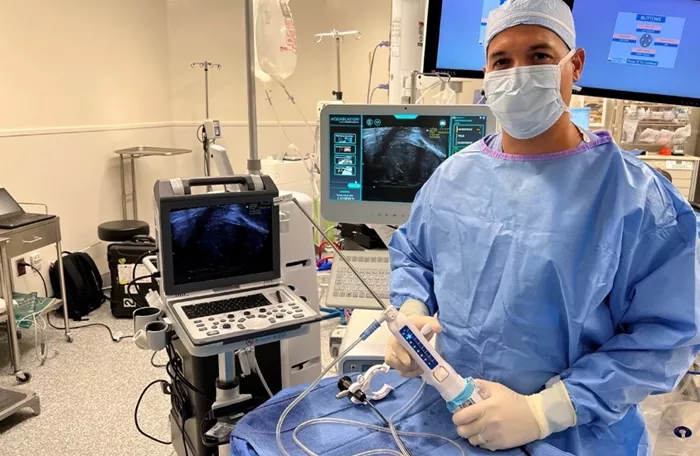
A new procedure called aquablation therapy is changing how doctors treat benign prostate hyperplasia (BPH), or an enlarged prostate.
Up to half of all men will develop this condition at some point. Dr. Aaron Bey, from The Urology Group, is one of the U.S. doctors leading the way with this innovative treatment.
“Benign prostate hyperplasia is just an enlarged prostate,” Dr. Bey explained. “It gets more common as men get older. By their 50s or 60s, many start having worse urinary problems because of it.”
Aquablation therapy uses a water system in the operating room. With the help of robot-guided ultrasound, surgeons create a precise plan for the procedure.
Hydroablation therapy, also known as aquablation therapy, is a minimally – invasive surgical method for treating benign prostatic hyperplasia (BPH). Here is a detailed introduction:
Working Principle: It uses a high – velocity water jet to ablate the obstructing prostatic tissue. Guided by real – time transrectal ultrasound imaging, the robotic – assisted system precisely controls the water jet, and removes the targeted prostate tissue without using heat.
Surgical Process: Firstly, doctors use real – time transrectal ultrasound imaging to map the prostate anatomy, carefully formulate a surgical plan, and try to preserve important nearby landmarks.
Then, a robotic – assisted system delivers high – velocity water jets through a cystoscopic handpiece according to the surgical plan to ablate the prostate tissue. After the ablation, a routine cystoscopic bladder washout is performed, and haemostasis is achieved by placing a three – way catheter.
Advantages
Minimally Invasive: No surgical incisions are required, which reduces the risk of bleeding and infection. It has less damage to the body and is suitable for prostates of any size.
High Safety: The treatment is guided by ultrasound, which can accurately target the prostate tissue, and the non – thermal ablation method reduces the risk of damage to surrounding tissues.
Effective Symptom Relief: It can effectively reduce the volume of the prostate, improve urinary symptoms, and has a significant long – term effect. Clinical studies have shown that it has obvious advantages over drugs and many other procedures.
Quick Recovery: The operation time is short, and the hospital stay is usually less than 48 hours. Most patients can get out of bed and move around a few hours after the operation.
Preservation of Sexual Function: In most cases, it can preserve the patient’s ejaculatory function, which is of great significance for improving the quality of life of patients.
Applicable Population: It is suitable for patients with lower urinary tract symptoms caused by BPH, and has no special restrictions on the size and shape of the prostate, so it can benefit a large number of patients. Moreover, for those who meet the relevant criteria, it is covered by medical insurance plans, which increases the accessibility of the treatment.
“Once we map out that precise plan, the robot uses a high-powered water jet to remove prostate tissue from the middle of the gland,” Dr. Bey said.
He added that the therapy not only eases symptoms but also works better than medication or other procedures—even five years after treatment.
“Statistically, patients see much more improvement with this therapy than with many other treatments we offer,” Dr. Bey noted.
For men who qualify, aquablation therapy is covered by most medical insurance plans.
Related topics:
