
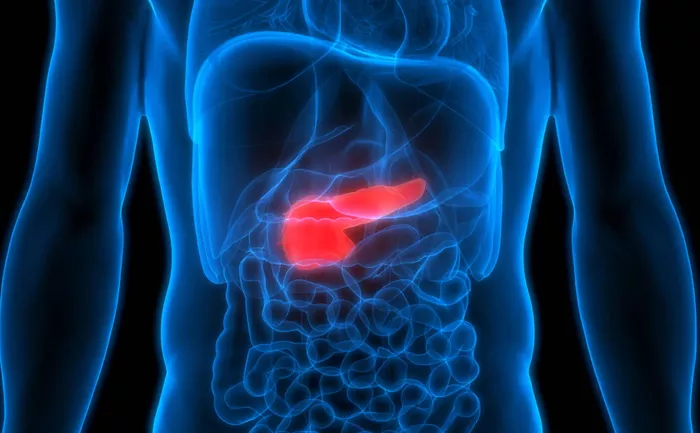
The U.S. Food and Drug Administration (FDA) has approved Novocure’s Optune Pax®, a wearable medical device, for use in adult patients with locally advanced pancreatic cancer in combination with gemcitabine (Gemzar®) and nab-paclitaxel (Abraxane®). This marks the first new treatment option in decades for this aggressive form of cancer.
Pancreatic cancer remains one of the deadliest cancers in the United States, ranking as the third leading cause of cancer-related deaths. While overall cancer incidence and mortality rates are stable or declining, pancreatic cancer rates are rising, with roughly 67,000 new cases diagnosed annually. The disease carries a five-year survival rate of just 13%, highlighting the urgent need for innovative therapies.
Treatment options for pancreatic cancer depend on disease stage. Locally advanced pancreatic cancer, which involves arterial encasement but no spread beyond the pancreas, is often inoperable at diagnosis, leaving chemotherapy with or without radiation as the primary treatment.
Optune Pax offers a new approach. The device delivers Tumor Treating Fields (TTFields)—alternating electric fields that disrupt cancer cell division—through wearable arrays, targeting tumors without significantly affecting healthy cells.
“In the Phase 3 PANOVA-3 trial, treatment with Optune Pax significantly improved overall survival and time to pain progression without adding systemic side effects,” said Dr. Vincent Picozzi, medical oncologist and trial investigator. “It also helps preserve quality of life, which is a priority for patients living with pancreatic cancer.” The trial results were published in the Journal of Clinical Oncology.
Clinical Trial Results
The PANOVA-3 trial was a global, randomized, open-label Phase 3 study evaluating Optune Pax combined with gemcitabine and nab-paclitaxel (gem/nab-pac) as a first-line therapy. A total of 571 patients were enrolled and followed for a minimum of 18 months.
In the intent-to-treat (ITT) population, median overall survival (mOS) was 16.2 months for patients receiving Optune Pax with gem/nab-pac versus 14.2 months for chemotherapy alone, a statistically significant 2-month improvement.
In patients adhering to treatment (modified per protocol, mPP), mOS reached 18.3 months with Optune Pax versus 15.1 months with chemotherapy alone, a 3.2-month gain.
One-year survival rates also improved, rising to 68.1% in the ITT group and 75.2% in the mPP group, compared with 60.2% and 65.9% for chemotherapy alone, respectively.
Optune Pax extended time to pain progression by 6.1 months, from 9.1 to 15.2 months.
Patients reported improvements in quality of life, including global health status, pancreatic pain, digestive issues, and emotional well-being.
Safety Profile
Optune Pax was well-tolerated and did not worsen chemotherapy-related systemic toxicity. Most device-related side effects were mild to moderate skin reactions, experienced by 76.3% of patients, with only 7.7% experiencing severe events. Fatigue was reported in 5.1% of patients. Importantly, no device-related deaths or unexpected safety issues were reported.
Industry and Advocacy Reactions
“This FDA approval represents a practice-changing opportunity for patients with locally advanced pancreatic cancer,” said Picozzi. Novocure CEO Frank Leonard highlighted the device’s unique biophysical mechanism, noting that it addresses the poor drug bioavailability often seen in pancreatic tumors.
PanCAN’s Chief Scientific Officer Dr. Anna Berkenblit added, “This milestone underscores the need for continued innovation in treating difficult cancers and provides meaningful progress for patients urgently needing more options.”
With the approval of Optune Pax, patients with locally advanced pancreatic cancer now have a novel, non-invasive therapy that improves survival and quality of life, offering new hope against a historically hard-to-treat disease.
