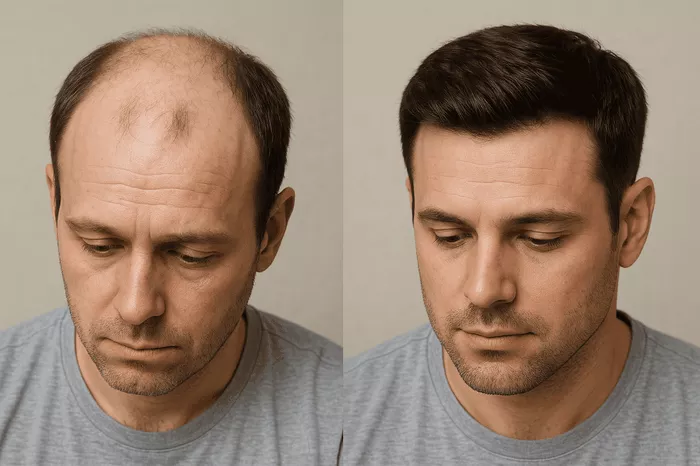
Hair transplantation has become one of the fastest-evolving disciplines within aesthetic medicine, driven by rapid technological innovation and rising global demand. A major development in this field is the KE-Bot, a U.S.-patented robotic system created by Dr. Koray Erdoğan, founder of the internationally renowned ASMED Hair Transplant Center in Türkiye. The technology is designed to introduce a more precise, data-driven approach to hair restoration across every phase of treatment, from planning to outcome assessment.
Unlike conventional hair analysis systems, KE-Bot functions as a 360-degree robotic scanning platform that produces a three-dimensional model of the scalp. Using advanced imaging and deep learning algorithms, it measures hair shaft thickness, follicular density, and graft distribution in the donor area before surgery. This allows surgeons to estimate donor capacity with greater objectivity and reproducibility, moving away from traditional methods that rely heavily on visual judgment and approximation.
During the postoperative phase, KE-Bot records the number and placement of transplanted follicular units in the recipient area. This enables clinicians to track outcomes using quantifiable data rather than subjective impressions. By documenting density metrics and proportional distribution, the system aims to support more natural-looking and homogeneous results while reducing the risk of excessive graft harvesting and long-term aesthetic complications. The technology also integrates predictive planning by factoring in potential future hair loss related to aging, allowing for more sustainable surgical strategies.
The system’s patent approval by the United States Patent and Trademark Office (USPTO) reflects a broader shift in hair transplantation from estimation-based practices toward a more objective, measurement-oriented clinical model. According to Dr. Erdoğan, this transition marks a fundamental change in how success in hair restoration should be defined and evaluated.
A central concept introduced alongside KE-Bot is “Coverage Value,” a quantitative metric designed to move beyond the long-standing industry focus on graft count alone. Traditionally, procedural success has been measured primarily by the number of grafts transplanted. However, Dr. Erdoğan argues that this metric fails to account for critical variables such as hair shaft diameter, follicular density, and distribution patterns, all of which significantly influence visual outcomes.
Coverage Value integrates these factors into a single, measurable framework, enabling surgeons to assess how much effective scalp coverage is achieved rather than how many grafts are used. This approach reframes the core clinical question from “How many grafts should be transplanted?” to “How much transplantation, and in what configuration, is required to achieve the desired result for this patient?” When combined with KE-Bot’s scanning and modeling capabilities, the metric offers data-driven guidance for both donor and recipient areas, supporting more consistent density and natural aesthetics.
Another key advantage of KE-Bot lies in its emphasis on long-term donor area preservation. By quantifying extractable graft numbers based on objective data, the system is designed to minimize the risks associated with overharvesting or uneven extraction. This sustainable planning model considers not only the current procedure but also the likelihood of future interventions, prioritizing balanced outcomes over maximum graft counts.
The technology also introduces a new level of transparency into the field. Objective postoperative reporting of graft numbers, density, and coverage metrics provides patients and surgeons with verifiable data, shifting discussions about results away from marketing claims and toward evidence-based evaluation. This data-centric approach positions hair transplantation as a more systematic surgical discipline supported by measurable clinical outcomes.
Beyond its technological implications, KE-Bot reflects a broader evolution in how hair restoration is conceptualized and practiced. Systems such as KE-Bot and the Coverage Value framework suggest that the future of the field will increasingly focus on how outcomes are measured, not merely on how procedures are performed.
Dr. Koray Erdoğan’s role in this transformation extends beyond clinical practice. In addition to being recognized for his surgical results, he has contributed conceptual and methodological innovations to hair transplantation through published research, digital analysis tools, and specialized instrumentation. These efforts position him not only as a practitioner but also as a developer of new standards and methodologies within the field.
As Türkiye continues to be a global hub for hair transplantation, long-term sustainability will depend on investments in technology development, scientific research, and the establishment of internationally recognized clinical standards.
Innovations such as KE-Bot have the potential to strengthen the country’s role as a scientific reference point in hair restoration, signaling a future in which precision, data, and sustainability define the next generation of aesthetic medicine.