
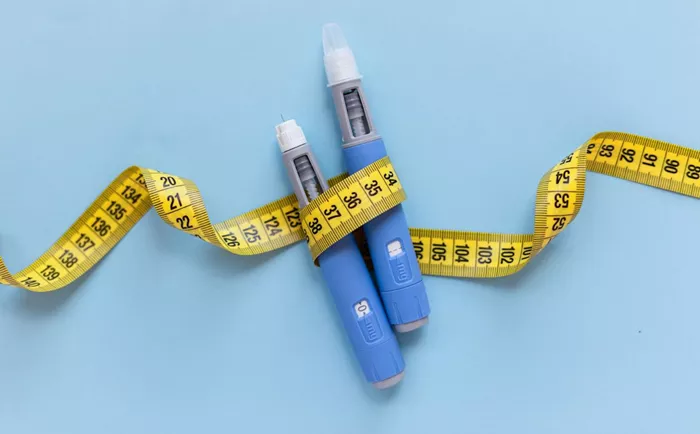
Experts from University College London (UCL) and the University of Cambridge warn that patients taking the latest generation of weight loss medications may not be receiving adequate nutritional guidance, leaving them at risk of deficiencies and loss of lean muscle mass.
Published today in Obesity Reviews, a study led by Dr. Marie Spreckley from the University of Cambridge highlights a lack of robust evidence on how nutritional support—or the absence of it—affects calorie intake, protein adequacy, body composition, and patient experiences during treatment.
Weight loss drugs such as semaglutide and tirzepatide—marketed under brand names including Ozempic, Wegovy, and Mounjaro—mimic the naturally occurring hormone glucagon-like peptide-1 (GLP-1). By suppressing appetite, enhancing feelings of fullness, and reducing food cravings, these medications can lower calorie intake by 16-39%, making them highly effective for people living with obesity.
However, researchers caution that up to 40% of the weight lost on these medications may come from lean body mass, including muscle. Dr. Adrian Brown, an NIHR Advanced Fellow at UCL and corresponding author of the study, said:
“Obesity medications are highly effective in supporting substantial weight loss and improving health outcomes. But without structured nutritional guidance, reduced food intake can compromise dietary quality, leaving patients deficient in protein, fibre, vitamins, and minerals essential for overall health.”
While the National Institute for Health and Care Excellence (NICE) recommends semaglutide as part of a comprehensive weight management program—including reduced-calorie diets and increased physical activity—for adults with a BMI over 35 and comorbidities, most patients in the UK access these drugs privately. Estimates suggest that 95% of the 1.5 million GLP-1 users obtain the medication outside the NHS, where nutritional support is often limited or absent.
Dr. Spreckley explained:
“The rapid uptake of GLP-1 therapies has outpaced the availability of nutritional support. Many patients receive little guidance on diet quality, protein intake, or micronutrient adequacy while experiencing strong appetite suppression. Without integrated care, there is a real risk of replacing one set of health problems with another.”
Inadequate micronutrient intake can lead to fatigue, weakened immunity, hair loss, and osteoporosis, while loss of muscle increases the risk of weakness, falls, and injuries.
The researchers reviewed just 12 studies examining diet alongside GLP-1 treatment. Variations in trial design, dietary advice, and nutritional assessment made it difficult to draw firm conclusions about optimal support. In the meantime, the team suggests drawing lessons from post-bariatric surgery guidance, which emphasizes nutrient-dense foods and evenly distributed high-quality protein to preserve lean mass during periods of rapid weight loss.
Co-author Dr. Cara Ruggiero from the University of Cambridge added:”While there isn’t enough evidence to recommend strict low-fat diets with these medications, observational studies show patients often consume excess total and saturated fats. Individualized dietary guidance aligned with national recommendations is likely needed, along with strategies like small, frequent meals to reduce side effects such as nausea.”
To better understand patients’ experiences, the researchers have launched AMPLIFY (Amplifying Meaningful Perspectives and Lived Experiences of Incretin Therapy), focusing on how these medications affect daily life, eating habits, wellbeing, and quality of life, particularly in communities historically underrepresented in obesity research.
“These drugs are transforming obesity care, but we need to understand how they impact people’s lives in the real world,” Dr. Spreckley said.
The study was funded by the National Institute for Health and Care Research (NIHR), with additional support from the Medical Research Council and the NIHR UCLH Biomedical Research Centre.
