
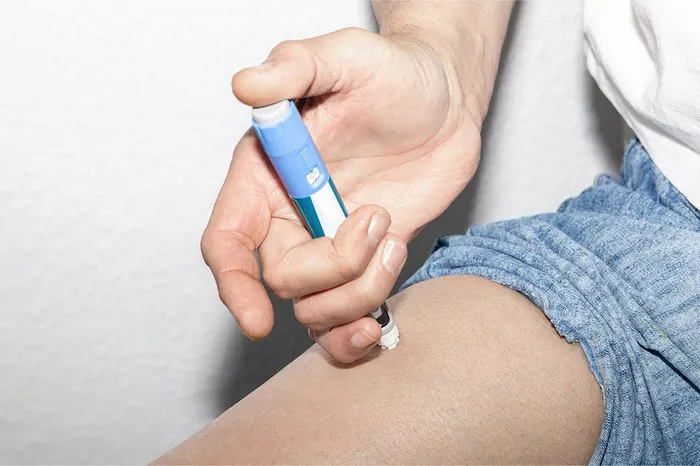
A new study has revealed that individuals who discontinue weight loss injections regain all the weight they initially lost in under two years—significantly faster than those following other weight loss strategies.
Weight loss medications, known as GLP-1 agonists, were originally developed to treat diabetes. They mimic the glucagon-like peptide-1 (GLP-1) hormone, which helps people feel full and reduces appetite.
The research, led by academics at the University of Oxford and published in the BMJ, reviewed 37 prior studies involving 9,341 participants. The average treatment period lasted 39 weeks, with a follow-up averaging 32 weeks.
On average, participants regained weight at a rate of 0.4 kg per month after stopping medication, returning to their original weight within 1.7 years. Those taking weight loss drugs lost an average of 8.3 kg during treatment but regained 4.8 kg within the first year.
The study found that weight regain after stopping medication occurred almost four times faster than after behavioral programs, which include diet or physical activity plans, regardless of the amount of weight initially lost.
Dr. Sam West, of the Nuffield Department of Primary Care Health Sciences at the University of Oxford, explained that the rapid weight regain is not due to the drugs themselves.
“These medicines are transforming obesity treatment and can achieve important weight loss. However, our research shows that people tend to regain weight rapidly after stopping—faster than we see with behavioral programs,” Dr. West said.
He added, “This isn’t a failing of the medicines—it reflects the nature of obesity as a chronic, relapsing condition. It underscores the need for a comprehensive, long-term approach to weight management and highlights the importance of primary prevention.”
Beyond weight loss, GLP-1 medications can also improve cardio-metabolic health, including blood pressure and cholesterol levels. However, the study found that these benefits also reversed within 1.4 years of stopping treatment.
While previous research suggested weight was regained within a year of discontinuing medication, this is the first study to quantify the rate of regain and provide an estimated timeframe for both weight and metabolic reversal.
In the UK, Wegovy can be prescribed on the NHS for up to two years, while Mounjaro has no set prescription limit.
“Weight loss drugs can be effective tools for managing weight and type 2 diabetes risk,” said Dr. Faye Riley, research communications lead at Diabetes UK. “But this research reinforces that they are not a quick fix. They need to be prescribed appropriately, with tailored support, to ensure people can maintain weight loss after stopping the medication.”
Katharine Jenner, executive director of the Obesity Health Alliance, emphasized that weight regain is not an individual failure. “It reflects the reality of living in a food environment that continually pushes people toward unhealthy options,” she said.
Jenner added that these drugs create a window of opportunity to improve the food environment, from reducing junk food marketing to increasing the affordability and availability of healthier foods, otherwise many people will struggle to maintain long-term benefits.
An NHS spokesperson stressed that while GLP-1 treatments are an important tool, they are not a magic solution. “They must be paired with behavioral and lifestyle support, including guidance on healthy diets and physical activity, to sustain weight loss over the long term,” the spokesperson said.
The NHS continues to expand innovative weight management programs, including the digital weight management initiative, which will reach an additional 125,000 people annually as part of its 10-year health plan.
