
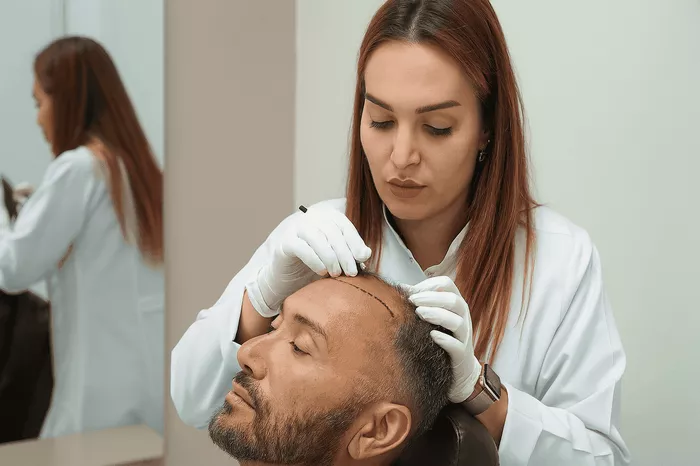
A relaxing holiday — wandering historical streets, basking on sunlit beaches, and enjoying the Riviera’s serene pace — can now come with an unexpected twist: medical procedures. Among these, hair transplants have emerged as a top choice for travellers seeking affordable, fast, and visually striking results. Türkiye, Thailand, and India have become global hotspots, luring patients with competitive pricing and viral social media coverage.
The allure is strong. Hair transplants can cost as little as US$1 per graft, says Dr. Joshua Chong, medical director at Terra Medical Clinic. “With Follicular Unit Extraction (FUE), where individual hair follicles are harvested and implanted, the procedure can be performed without in-depth anatomical knowledge,” he notes. “This makes it possible for some practitioners to offer cutthroat prices, though not always safely.”
Dr. Rachel Ho, medical director at LA Clinic, adds that social media plays a decisive role in medical tourism. “Türkiye has a well-established reputation for cosmetic treatments, especially among Europeans. TikTok and Instagram are flooded with transformation videos — facelifts, rhinoplasties, hair transplants — fueling demand. Some patients want subtle improvements, but many are drawn to dramatic overhauls.”
Yet, the apparent savings can be deceptive. Complications may arise, requiring follow-up procedures or corrective care that can exceed the initial cost. “Even minor procedures carry risks,” Dr. Ho warns. “Injectables like Botox, threads, or fillers can lead to asymmetry, infection, or more serious complications like blindness. Patients need to consider if overseas clinics can manage these outcomes safely.”
The Risks Behind the Hype
Marketing for hair transplants often obscures reality. “Unlimited grafts or ‘no-scar’ promises are red flags,” Dr. Chong says. The donor area has limited follicles, and overharvesting can leave permanent thinning. FUE avoids a linear scar, but creates hundreds of tiny dot scars.
Hair loss itself is complex, he emphasizes, influenced by genetics, hormones, nutrition, stress, and underlying conditions such as polycystic ovarian syndrome or lupus. “A comprehensive assessment by an experienced professional is essential — sometimes surgery isn’t even necessary.”
Understanding the Subtle Art of Hair Restoration
Men make up the majority of hair transplant patients, with 75% showing pattern baldness by age 40. Women increasingly seek transplants for hairline reshaping, eyebrow restoration, scar repair, and congenital defects. Experts stress that results should be natural-looking, subtle, and proportional.
“The hairline should not be perfectly symmetrical; irregularities are natural,” explains Leonica Kei, trichologist and founder of Leonica K Trichology. Dr. Chong adds that understanding Asian hairline characteristics is crucial to avoid artificial results.
FUE involves more than placing follicles. Hair direction, temple positioning, exit angles, and donor-to-recipient ratios all impact the final appearance. Mistakes can lead to overharvesting or unnatural density.
Medical Tourism Requires Caution
The convenience of booking a medical tourism package can mask risks. Condensed timelines may pressure patients into rushed decisions. Testing key markers like ferritin, vitamin D, and hormone levels is essential, particularly for women. Psychological readiness and realistic expectations are equally important. “Shedding before regrowth is normal,” Dr. Chong explains, illustrating the process over several months to prevent patient anxiety.
Black-market clinics and syndicate-run operations remain a threat. Patients should verify credentials, look for Joint Commission International accreditation, and consult ISHRS or the American Board of Hair Restoration Surgery. Virtual consultations, transparent communication, and medical insurance are non-negotiable safeguards.
Conclusion
While competitive pricing and viral social media make overseas hair transplants tempting, safety and realistic outcomes should guide decisions. Choosing a qualified, experienced professional — one who understands both the science and limits of hair restoration — remains the most reliable path to lasting, natural results.
