
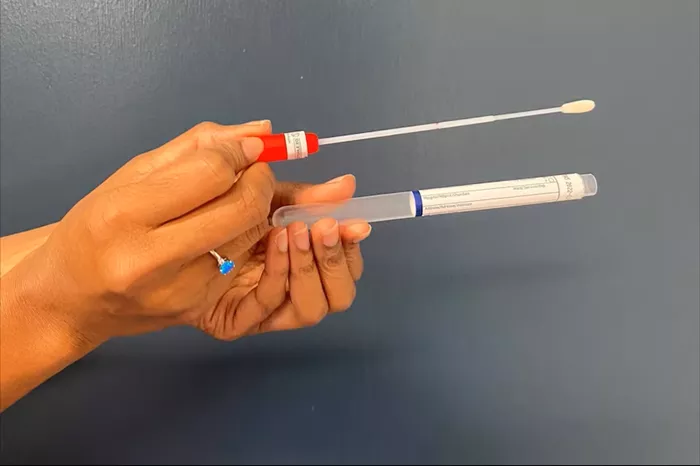
The American Cancer Society has released updated cervical cancer screening guidelines, co-authored by University of Virginia physician Dr. Andrew Wolf.
The new guidance introduces the option for women to self-test for human papillomavirus (HPV), the virus responsible for nearly all cervical cancers. Self-testing can be done at home or using a swab at a doctor’s office, providing an alternative to the traditional Pap smear. While clinician-collected samples remain the preferred method, Wolf says self-testing could expand access to screening.
“About a quarter of women in the U.S. are not current with cervical cancer screening, and in rural areas, that number rises to 50%,” Wolf said. He noted that the FDA has approved only one self-test, the Teal Wand, which is available in 30 states, including Virginia.
“This is how we prevent cancer, not just detect it—by identifying the cause early,” Wolf added. “Any way to increase screening by lowering barriers is important. Self-testing is one effective approach.”
Wolf recommends self-testing every three years, while clinician-collected tests should be done every five years. He emphasized that self-testing is only appropriate for women at average risk. Those with a history of abnormal results, recent positive HPV tests, immune system suppression, or prenatal exposure to diethylstilbestrol (DES) should continue with clinician-administered screening.
Related topic:
