Young women across Wales say schools teach practical life skills, like opening a bank account, but neglect essential women’s health education, including menstrual hygiene and recognizing signs of serious conditions.
“As a person from an ethnic minority background, in some communities it’s taboo to talk about these topics,” said 23-year-old Athika Ahmed. “If you don’t learn about them in school, where do you?”
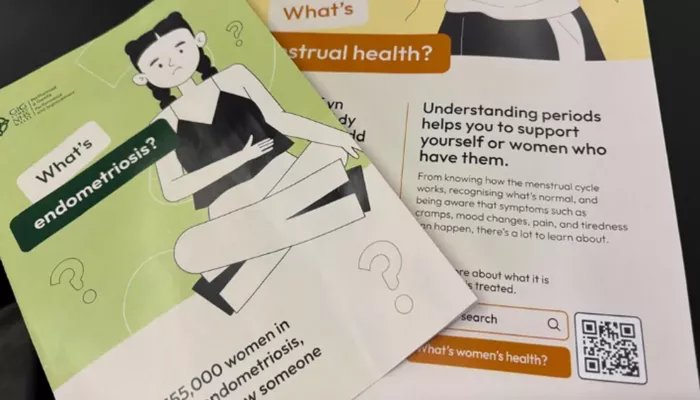
Ahmed was among the young people involved in designing new school resources aimed at increasing understanding of common women’s health issues. The materials, including leaflets and posters, will cover menstrual health, endometriosis, pelvic health, and menopause, and will be distributed in secondary schools.
As a member of the Cardiff and Vale health board’s youth panel, Ahmed helped shape the content. She recalled feeling unsupported when she began menstruating at a very young age. “I didn’t know when to change my pad, what type of pad to use, or the difference between a pad and a tampon,” she said. “Simple guidance on hygiene could help young people become confident and informed.”
While menstrual education is mandatory in Wales, this is the first time school resources explicitly include conditions such as endometriosis, which affects about 155,000 women in the country. The materials provide basic information and direct students to online support from Sexual Health Wales, Brook, Bloody Brilliant, and Endometriosis Cymru.
Molly Fenton, another youth panel member, said her menstrual cycle revealed more serious health problems. “I live with a brain tumour affecting my optic nerve and pituitary gland,” she said. “My periods were the first sign. They dominated my life, and losing them at 16 caused long-term health issues. Talking about periods early could help young people advocate for themselves.”
Natalie McDonald, a specialist community public health nurse, said young people often seek advice about symptoms rather than specific conditions. School nurses are now receiving training in issues like endometriosis to guide students and engage families or teachers when appropriate. “Some students won’t go to their GP due to barriers,” she said. “These new resources will empower young people and support our message.”
The resources stem from the Women’s Health Strategy for Wales, published a year ago. Seventeen-year-old Elen noted that boys on the youth panel contributed to designing the materials, although lessons are typically gender-segregated. “There’s a stigma, but understanding women’s health is relevant to everyone,” she said.
Sarah Murphy, Welsh Minister for Mental Health and Wellbeing, said women’s health pathfinder hubs are expected to launch in the coming months. “The biggest change will be in healthcare professional training and how women are treated,” she said. “The goal is for pain and symptoms not to be dismissed, and for services to be accessible across all health boards.”
Related topic:
- Breast Cancer Scandal in Spain Leaves ‘Forgotten’ Women Seeking Justice
- New-Generation ADC Shows Promising Results in HER2+ Breast Cancer
- WHO Backs GLP-1RAs for Weight Loss Amid Access Concerns