
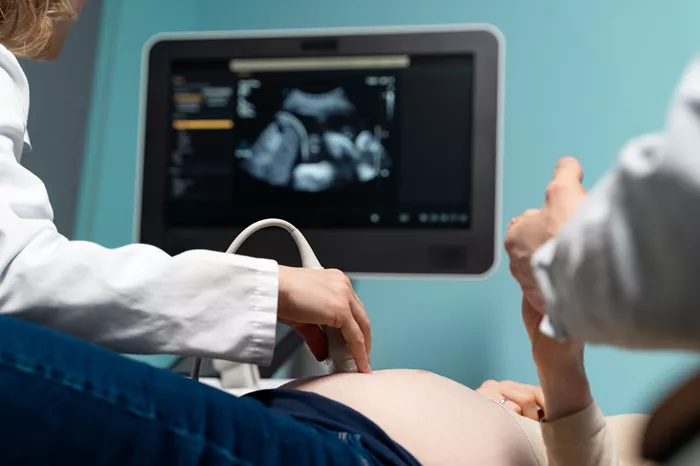
A new study from the University of Oxford reveals that performing ultrasound scans in the early first trimester can help doctors identify serious fetal abnormalities much sooner. The research was led by Professor Aris Papageorghiou and published on November 25 in PLOS Medicine.
In England, pregnant people usually receive a routine ultrasound at 12 weeks to determine the stage of pregnancy. A more detailed scan is typically done at 20 weeks — during the second trimester — to check for severe birth defects known as congenital anomalies. These occur in about 2–3% of pregnancies.
Recent advances in ultrasound imaging, however, now allow such checks to be done earlier. Despite this progress, there is still no national policy requiring early scans, and experts have questioned whether these exams lead to earlier diagnoses.
The Oxford team analyzed data from more than one million pregnancies across England between April 2017 and March 2019. They reviewed 14 major types of fetal anomalies and compared hospitals that used detailed early ultrasound protocols with those that did not.
Hospitals with structured early scan guidelines detected about 40% of major anomalies before the 16th week of pregnancy. In contrast, hospitals without early scan protocols detected only 28%. Conditions such as acrania — where the skull fails to form — were often identified early in all hospitals. However, other issues, like heart or limb defects, were more frequently found in hospitals that conducted detailed first-trimester scans.
The findings show significant variation in early ultrasound practices across England. More comprehensive first-trimester screening methods were linked to better early detection of abnormalities. According to the researchers, creating a national policy for detailed early scans could ensure more consistent and equitable prenatal care across the National Health Service (NHS).
Dr. Jehan Karim, one of the lead researchers, emphasized that “with advancing ultrasound technology, detecting serious fetal conditions much earlier is now possible. Our guidelines must evolve so families can benefit fully.”
Professor Papageorghiou added, “A single, focused first-trimester ultrasound can detect major fetal conditions weeks earlier. This gives families more time to consider their options. Yet because of inconsistent guidance, detection rates still vary widely. Our data show that organized early scans are the most effective way to improve prenatal care across the country.”
Related topics
Cervical Cancer Survival Improve with Consistent HIV Treatment, Study Reveals
New Study Finds Missing First Breast Cancer Screening Raises Death Risk by 40%
Chiron Doubles Support With Expanded Campaign Offering Free Breast Screening
