
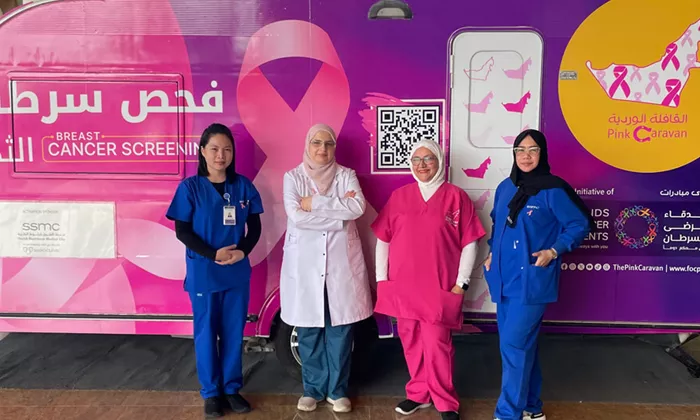
In 2024, over 2,200 women in the UAE underwent breast cancer screening, with 62% doing so for the first time, according to healthcare authorities. Medical professionals credit this significant increase to nationwide awareness campaigns, mobile screening units, cross-sector collaborations, and initiatives aimed at improving accessibility and affordability.
“Awareness about breast health has grown significantly,” said Dr. Nita Zaji, Specialist General and Breast Surgeon at Medcare Women & Children Hospital. “National and private healthcare institutions collaborate every October for large-scale campaigns. These campaigns are visible across social media, workplaces, shopping centres, and even petrol stations. They are turning awareness into action by making screenings accessible, convenient, and affordable.”
Personal Stories Highlight the Importance of Early Detection
Dr. Zaji recounted experiences of women who benefited from early screening. One Indian patient in her late 30s, who had never undergone breast screening, utilized a discounted package during a campaign. Despite initial hesitation, she found the experience reassuring and left relieved after receiving clear results.
Another patient, a Filipino woman in her 40s, was diagnosed with an early-stage lump through a mammogram. Thanks to a personalized care plan and follow-up support on nutrition and lifestyle, she successfully completed treatment and made a full recovery. These stories underline how timely screening can transform patient outcomes.
Overcoming Fear and Misconceptions
Healthcare providers note that emotional barriers—rather than medical ones—often prevent women from seeking screenings. “Many worry a mammogram might be painful or uncomfortable,” Dr. Zaji explained. “Providers now focus on creating gentle, supportive experiences with female staff and private screening areas. Women must understand that early-stage breast cancer often shows no symptoms, making regular screening critical.”
Financial and privacy concerns are also addressed through discounted packages and culturally sensitive care. “Having female medical staff and private areas ensures comfort and respect for modesty,” added Dr. Zaji.
Mobile Units and Community Outreach Expand Access
Dr. Tariq Alhamid, Medical Oncology Specialist at Burjeel Cancer Institute, emphasized the role of mobile units and community initiatives. “Programs like the Ministry of Health’s campaigns, Friends of Cancer Patients’ Pink Caravan, and our ‘Pink Truck’ take screenings directly to neighbourhoods, workplaces, and malls. This approach overcomes logistical and cultural obstacles, particularly for first-time participants.”
Social media, survivor stories, and open conversations about women’s health are further changing perceptions. Dr. Alhamid stressed, “Misconceptions persist, such as believing a biopsy can spread cancer. Biopsies are safe, minimally invasive, and crucial for accurate diagnosis and timely treatment.”
Cultural Shift Toward Preventive Healthcare
According to Dr. Moustafa Aldaly, Consultant in Medical Oncology at International Modern Hospital, Dubai, preventive healthcare awareness among women in the UAE has improved markedly. “Targeted campaigns, expanded imaging services, affordable packages, and dedicated insurance programs have encouraged first-time screenings,” he said. The increasing presence of female radiologists, technicians, and surgeons has also made screenings more approachable.
From Awareness to Assurance
The UAE’s healthcare system continues to enhance accessibility through mobile units, digital bookings, and multilingual educational programs. “Education now includes real case scenarios showing the benefits of early detection—smaller surgeries, less chemotherapy, shorter hospital stays, and better survival,” Dr. Aldaly explained. “Women increasingly view screening as empowerment rather than fear.”
The combined efforts of awareness campaigns, accessible services, and culturally sensitive care are transforming breast cancer screening from a daunting task into an essential, life-saving practice for women across the UAE.
Related topics
