
The following synthesis follows professional journalistic standards, preserving the original study’s meaning while organizing the content into a structured, reader-friendly format.
Background and Context
Endometriosis is a chronic, estrogen-dependent disorder in which tissue similar to the uterine lining grows outside the uterus. It commonly affects the pelvic region and is a major cause of pelvic pain and infertility, impacting about 10% of women of reproductive age. The development of the condition involves hormonal, inflammatory, and immune processes influenced by genetic and environmental factors. Typical symptoms include non-menstrual pelvic pain, dysmenorrhea, and back pain.
Diet has emerged as a potential modifiable factor in endometriosis. Researchers are exploring how nutrition might influence inflammation, oxidative stress, hormone balance, and muscle contractions—all of which can affect disease progression. Prior work has suggested beneficial associations with fertility-oriented, MIND, and AHEI dietary patterns, while some findings regarding whole grains and other components have been mixed.
About the Study
In Tehran, Iran, researchers conducted a hospital-based case–control study involving 115 women with surgically or histologically confirmed endometriosis and 230 controls without the disease. After data exclusions, the final analysis included 105 cases and 208 controls. Participants were aged 18–49, not pregnant or menopausal, and free from major chronic conditions. Dietary intake over the previous year was assessed with a validated 168-item Food Frequency Questionnaire (FFQ). Researchers used the Medi-Lite score to measure Mediterranean diet adherence and derived a Healthy Diet Indicator (HDI) from WHO guidelines to gauge overall diet quality. Analyses adjusted for age, BMI, energy intake, age at menarche, menstrual factors, smoking, occupation, and family history.
Key Findings
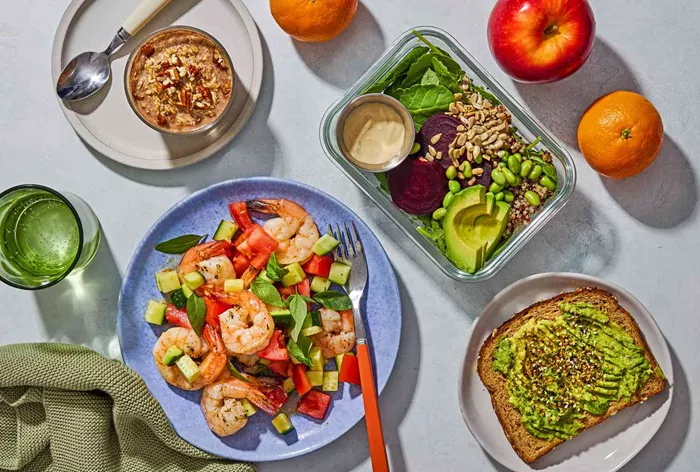
Controls showed higher adherence to the Mediterranean diet than cases (mean Medi-Lite score 9.21 vs. 5.63) and better overall diet quality (HDI mean 5.54 vs. 2.80). Food-group patterns differed: controls consumed more fruits, nuts, fish, vegetables, and legumes, while cases consumed more saturated fats, meat, and dairy. Whole-grain intake was higher among cases.
High adherence to the Mediterranean diet was associated with markedly lower odds of endometriosis (adjusted OR 0.06; 95% CI 0.02–0.15), indicating a 94% reduction in odds compared with low adherence. Specific components showed protective associations: fruits and nuts (OR 0.09), vegetables (OR 0.18), fish (OR 0.16), and legumes (OR 0.26). Conversely, higher meat intake was linked to substantially higher odds (OR 10.36), and dairy intake also showed increased odds (OR 4.58). Unexpectedly, higher whole-grain intake correlated with increased odds (OR 2.30).
Higher HDI scores were associated with a 95% reduction in odds (adjusted OR 0.05). Within HDI components, fruits, vegetables, fiber, pulses, and nuts were protective, while saturated fat (OR 7.01) and monounsaturated fatty acids (MUFA) (OR 7.91) were linked to increased risk. The authors noted the MUFA finding could reflect population-specific dietary sources or residual confounding rather than a direct effect.
Conclusions
The study suggests strong adherence to the Mediterranean diet and overall high-quality diets are associated with significantly lower odds of endometriosis among Iranian women. Diets rich in fiber, fruits, vegetables, fish, and legumes may contribute to reduced risk through anti-inflammatory and antioxidant effects and improved hormonal balance. Interpretations regarding whole grains and MUFAs should be cautious due to potential confounding factors and local dietary patterns.
Strengths and Limitations
Strengths include the use of validated dietary assessment tools, blinded data collection, and adjustment for key confounders. Limitations include the observational, case–control design, potential recall bias, and unmeasured factors such as socioeconomic status, coffee, soy, phytoestrogens, specific oils, and supplement use. Causality cannot be established from this study.
Implications for Practice
These findings reinforce the potential role of dietary patterns in modulating endometriosis risk and highlight the Mediterranean diet as a plausible component of lifestyle strategies. Clinicians may consider nutritional counseling that emphasizes fruits, vegetables, legumes, fish, and nuts while moderating red meat and dairy intake as part of a broader, patient-centered approach. Further prospective and interventional research is needed to clarify causal relationships and identify population-specific dietary effects.
Related topics
