
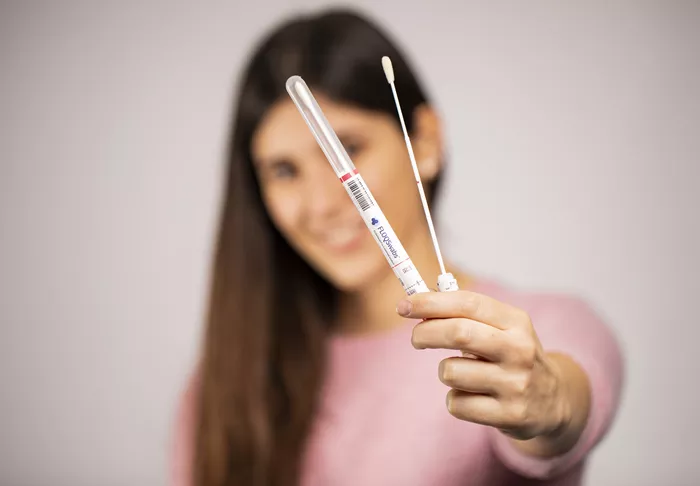
A new study suggests that giving Asian American women the ability to collect their own samples for human papillomavirus (HPV) testing could significantly improve cervical cancer screening rates. The findings were presented at the 18th American Association for Cancer Research (AACR) Conference on the Science of Cancer Health Disparities, held September 18–21, 2025.
Researchers found that women who used self-collection kits were nearly three times more likely to complete cervical cancer screening compared with those referred to clinics for Pap tests.
Why Cervical Cancer Screening Still Falls Short
HPV infection—especially high-risk strains such as HPV16 and HPV18—is responsible for almost all cervical cancer cases. Routine Pap smears and HPV testing can detect these infections early and prevent cancer from developing. Despite these effective tools, many women remain unscreened.
Asian American women, in particular, have some of the lowest cervical cancer screening rates in the United States. Cultural stigma, lack of access to care, language barriers, and discomfort with pelvic exams can discourage women from visiting a clinic for testing.
“Our prior studies identified psychosocial and logistical barriers as major reasons Asian American women do not get screened,” said Carolyn Fang, PhD, associate director for population science at Fox Chase Cancer Center – Temple Health and lead investigator of the study. “We wanted to see if offering self-collection for HPV testing could help overcome those challenges.”
Study Design and Findings
The study enrolled 1,140 Asian American women between the ages of 30 and 65. Nearly all participants (99.8%) were foreign-born, and almost half (47%) had never received a Pap smear. All attended community-based educational workshops on cervical cancer, which included information on screening and referrals to affordable clinics.
After the workshop, about half of the participants received HPV self-sampling kits, available in English, Korean, Vietnamese, and Chinese, along with detailed instructions. The other half were referred to local clinics for screening.
The results were striking:
87% (480 of 552) of the women who received self-collection kits completed HPV testing within six months.
In contrast, only 30% (176 of 588) of the women referred to clinics had undergone a Pap test in the same period.
Among those who self-tested, 14% were HPV-positive, and 9% had high-risk HPV strains requiring follow-up care.
“These findings show that when screening is made more convenient, private, and culturally sensitive, women are far more likely to participate,” Fang explained. “This kind of approach can help us move closer to the goal of eliminating cervical cancer.”
Empowering Women Through Accessibility and Education
Fang emphasized that the success of self-sampling lies not only in convenience but also in empowering women to take charge of their health. Many participants reported that being able to test privately at home reduced embarrassment and anxiety about traditional exams.
The research team plans to continue studying whether self-sampling encourages women to engage more consistently with preventive health care over time—especially those who lack regular providers. “By increasing familiarity and comfort with screening, we hope to foster ongoing engagement with gynecologic care,” Fang said.
Next Steps and Limitations
While promising, the study had some limitations. Researchers did not follow participants long-term to confirm whether those who tested positive for high-risk HPV received appropriate follow-up care. Additionally, the study focused on Chinese, Korean, and Vietnamese women, so results may not fully represent other Asian American groups.
Even so, the findings add to a growing body of evidence supporting HPV self-sampling as an effective way to increase cervical cancer screening among underserved populations. Several professional medical organizations are now considering incorporating HPV self-collection into official screening guidelines.
“This is a practical and culturally responsive way to reach women who might otherwise fall through the cracks,” Fang said. “Expanding access to self-collection could help save lives.”
Related topics
