
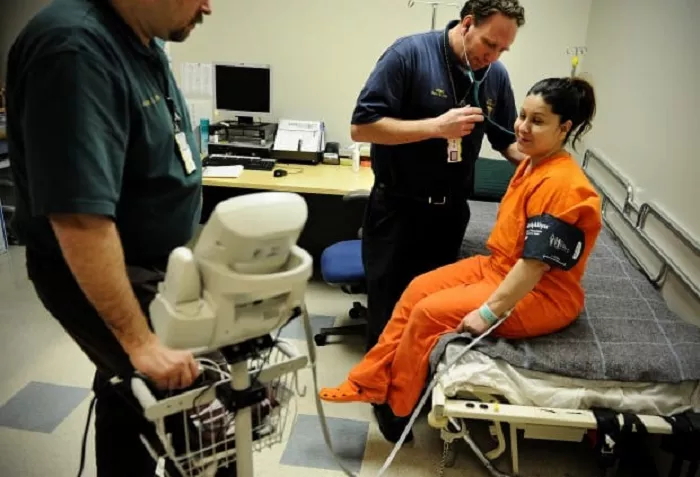
TOKYO – A stark case of medical neglect in a Japanese prison is highlighting a systemic healthcare crisis behind bars, where delayed treatments and understaffing are putting inmates’ lives at risk, according to a recent investigative report.
The issue came to light through the ordeal of a 64-year-old man, incarcerated at Tokyo’s Fuchu Prison in 2007. The inmate, who suffered from chronic prostate enlargement and hypertension, repeatedly requested to continue medication prescribed by an outside hospital. His requests, and those of his wife, were denied by prison authorities. Over 18 months, his condition deteriorated significantly until he began urinating blood. Only then was he rushed to the prison hospital for surgery.
“If we had waited another week, you would have died of uremic poisoning,” the surgeon at Hachioji Prison Hospital told him.
This case is not isolated. It points to broader systemic problems driven by a critical shortage of doctors and shrinking budgets for inmate healthcare. Across Japan’s prison system, over 10% of the 226 authorized physician positions remain unfilled. At the same time, the incarcerated population is increasingly comprised of older adults and economically vulnerable individuals with greater medical needs, causing healthcare costs to soar from approximately 3 billion yen in 2005 to 4.9 billion yen in 2009.
The path to receiving medical care inside the prison walls is often fraught with obstacles, inmates report. Requests must first go through a prison nurse or aide, who may dismiss symptoms as malingering. Even when an inmate sees a doctor, consultations are often brief and may be with a physician outside their needed specialty.
A non-profit organization monitoring prison rights, the Center for Prisoners’ Rights, has documented alarming accounts. These include guards forcing an inmate with a chronic circulatory condition to maintain a formal kneeling posture (“seiza”) for extended periods, and an internal medicine physician being forced to surgically remove a tumor in the absence of a surgeon, leading to a severe infection.
A former inmate identified only as “Mr. B” described a culture that discourages reporting illness and injury. He stated that inmates involved in workplace accidents, even those deemed unintentional, often receive only minimal treatment like ointments and bandages. In some cases, their prison wages are docked.
“Because failing to avoid an accident is a mark against a prisoner’s evaluation by guards, injured prisoners are discouraged from reporting,” Mr. B explained. “Some try to hide serious injuries, leading to conditions that gradually worsen.”
Public sentiment, as noted by investigative journalist Kazue Fujita, often questions the use of taxpayer money for inmate healthcare. However, Fujita argues that the state of a nation’s prisons reflects its core values.
“Prison is a mirror reflecting the true feelings of a nation and its citizens,” Fujita observed. “Is providing prisoners with minimal care intended as a form of punishment beyond incarceration itself?”
The gap between the ideals upheld by law and the on-the-ground reality, she concludes, is a difficult one to bridge.
Related topics:
