
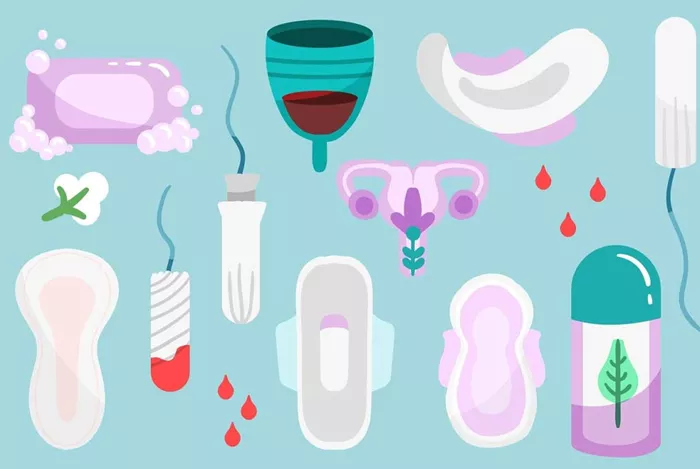
Six months ago, Selin Celikoyar made a significant change in her menstrual care routine by purchasing her last tampon and switching to a reusable menstrual disc.
“I had concerns about tampons both environmentally and biologically. They seemed wasteful and costly to keep buying,” she explained.
Reusable menstrual products like flexible discs, silicone cups, and period underwear are rapidly gaining popularity as sustainable alternatives to the billions of disposable pads and tampons discarded annually. These products can be reused for years, offering a more economical and eco-friendly solution. Experts note the pandemic also played a role in increasing adoption, as people had more privacy at home to try new period care options.
Celikoyar shared that she had used traditional tampons and pads for years simply because those were the familiar choices growing up. But after seeing a friend switch to a menstrual disc, she decided to give it a try.
“The experience has truly been a game changer,” she said.
The Environmental Toll of Disposable Products
Dr. Luwam Semere, chief of obstetrics and gynecology at Kaiser Permanente Santa Clara, highlights the staggering environmental impact of single-use menstrual products. Approximately 12 billion disposable pads and 7 billion tampons are dumped into U.S. landfills every year. Most pads contain plastic and can take up to 800 years to decompose, according to the National Institutes of Health.
Despite their prevalence, single-use pads and tampons remain the dominant menstrual products largely because they are the default options passed down through generations. Dr. Navya Mysore, a primary care physician in New York City, explains, “Often, period hygiene education is based on what a mother or grandmother used, which limits exposure to alternative products.”
Benefits and Challenges of Reusable Menstrual Products
Menstrual cups are the most popular reusable product, inserted similarly to tampons. Discs, which sit farther inside, have the advantage of not interfering with intercourse. Both can hold significantly more fluid than tampons and be worn for up to 12 hours, compared to the 4-8 hours recommended for tampons. Dr. Semere adds that the risk of Toxic Shock Syndrome is considerably lower with these reusable options.
However, reusable products come with a learning curve. Proper insertion requires technique, and mistakes can be messy. Regular cleaning with soap and water is necessary, which can be inconvenient in public or shared restrooms, Mysore notes.
Additionally, menstrual cups create suction to prevent leaks, which may dislodge intrauterine devices (IUDs) if removed improperly. Discs do not use suction but can be harder to remove initially due to their higher placement, according to Dr. Annemieke van Eijk, an epidemiologist at the Liverpool School of Tropical Medicine.
For Celikoyar, the advantages outweigh these challenges. She appreciates the extended wear time, which has helped her manage long concerts and overnight flights without stress.
“There’s an ease of use for the modern woman that surpasses traditional methods,” she said.
Cost Considerations
Menstrual cups and discs typically range from $15 to $40 and are available online, in pharmacies, and at large retailers. Van Eijk recommends experimenting to find the right fit but acknowledges that the upfront cost may be a barrier for some.
Over time, reusable products can save money. Celikoyar estimates she used about 20 tampons a month at 20 to 25 cents each, meaning a reusable product pays for itself in a few months.
For those preferring pads, period underwear offers a reusable alternative with absorbent lining that looks like regular underwear. Dr. Semere notes that these are gentler on skin, reducing irritation caused by disposable pads. However, users must monitor absorption levels, similar to disposable pads.
Mysore suggests many women mix and match products, pairing period underwear with cups, discs, or tampons based on flow and comfort.
READ MORE
