
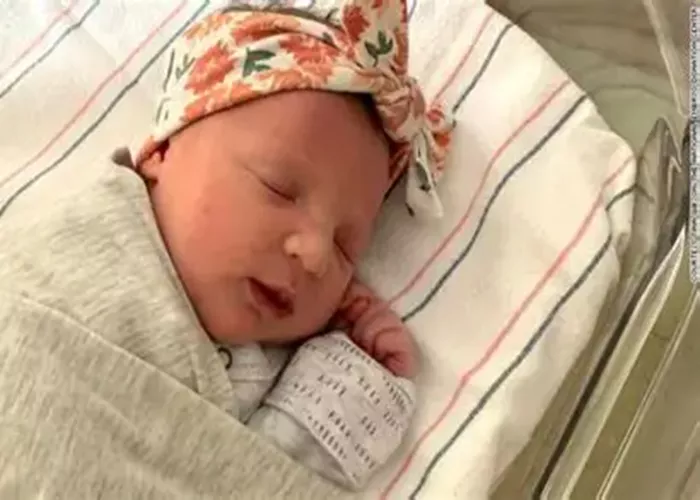
Sadieus Daniel Pierce, born in London, Ohio, has set a new record as the world’s “oldest” baby—conceived from an embryo frozen for 31 years, with its origins tracing back to 1994. The milestone, reported by MIT Technology Review, has left both the adopting couple and the embryo donor in awe.
Lindsey Pierce, 35, and her 34-year-old husband Tim Pierce, who “adopted” the embryo, described the experience as “like a scene from a sci-fi movie.” Linda Achey, the donor of the embryo, called it “surreal.”
The journey began in 1994 when Achey, after six years of infertility, and her then-husband used in vitro fertilization (IVF) to create four embryos. One was implanted immediately, resulting in a daughter who is now in her 30s. The remaining three embryos were frozen, and Achey—now 62—later chose to donate them via the Snowflakes Program, which connects embryo donors with adoptive families, rather than discarding them or using them for research.
After a screening process, the Pierce couple was selected. Lindsey Pierce noted they never imagined adopting an embryo frozen for nearly three decades, calling it a “long-awaited blessing” that also let Achey’s hope live on.
Sadieus’ birth highlights advances in frozen embryo and IVF technologies. Early embryo storage relied on slow-freezing, which risked harmful ice crystal formation. But by the early 2000s, clinics shifted to vitrification—a rapid freezing method where embryos are plunged into liquid nitrogen, turning them into a glass-like state. Thawing takes just two seconds in warm solution, drastically boosting survival rates—with Sadieus’ case a prime example.
However, embryo freezing comes with rising costs. According to 2023 reports, annual storage fees range from $400 to $650 for eggs and embryos, with additional IVF-related steps costing $2,700–$3,300 yearly. Achey paid around $1,000 annually to store her embryos, a cost she deemed “worthwhile” for the life it preserved.
The record surpasses the 2022 birth of twins Lydia Ann and Timothy Ronald Ridgeway, whose embryo was created in 1992, and Molly Gibson, born from a 27-year-old embryo. These cases show that embryos can survive decades at -196°C, defying time constraints.
Yet, IVF advancements spark ethical debates. Donor-conceived children may never meet biological parents, and genetic testing could undermine donor anonymity. Additionally, long-frozen embryos can widen age gaps between parents and children, raising relationship complexities. With millions of frozen embryos worldwide, questions about handling unused ones and ensuring ethical donations remain pressing for society.
Sadieus’ story, while a testament to technological progress, underscores the need for ongoing dialogue on the ethics of extending human life through frozen embryos.
Related topics:
Psilocybin Depression Treatment Benefits Low-Income Adults
Male Birth Control Pill Clears Safety Hurdle in Health Breakthrough
Boost Daily Skin Health With Ulta’s Top-Rated Men’s Face Wash
