
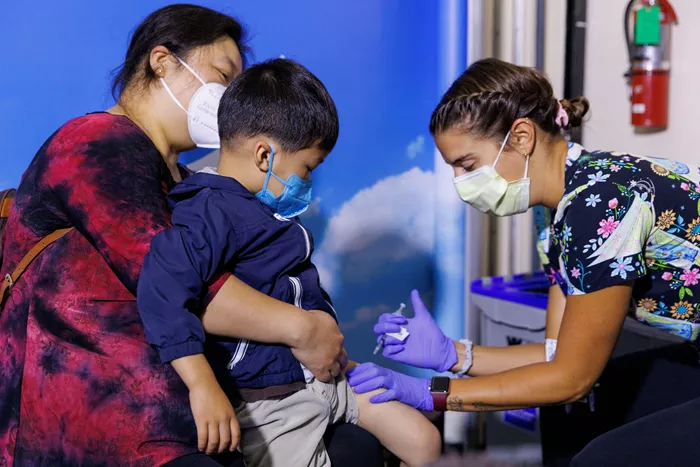
Federal data released Thursday reveals that kindergarten vaccination rates in the U.S. declined for another year, while the proportion of children with vaccine exemptions reached an all-time high.
In the 2024-25 school year, 4.1% of kindergartners were exempted from required vaccines—up from 3.7% the previous year—marking the third consecutive year of record-breaking exemption rates. The vast majority of these exemptions stem from nonmedical reasons, such as parental choice.
Concurrently, 92.5% of kindergartners received the required measles-mumps-rubella (MMR) vaccine, a slight drop from the prior year. Pre-pandemic, this rate stood at 95%—the threshold considered necessary to prevent single infections from spiraling into clusters or outbreaks.
The data emerges amid the worst measles outbreak in the U.S. in over three decades, with more than 1,300 cases reported so far this year. “The concern is that with further declines in vaccination coverage, we could see even more measles in the coming months,” said Dr. Sean O’Leary, a pediatric infectious diseases specialist at the University of Colorado and member of the American Academy of Pediatrics.
O’Leary suggested that this year’s outbreaks might prompt more parents to vaccinate their children before school, but Dr. Philip Huang, Dallas County’s health director, is less hopeful. Texas, which accounted for over half of the nation’s measles cases this year, recently passed legislation making it easier for parents to secure nonmedical exemptions—“It’s crazy,” Huang remarked.
Notably, the Centers for Disease Control and Prevention (CDC) departed from its usual practice of releasing vaccination data in its Morbidity and Mortality Weekly Report with accompanying expert analysis.
Instead, the agency quietly posted the data online and, when queried, issued a statement emphasizing, “The decision to vaccinate is a personal one. Parents should consult their health care providers on options for their families,” while adding that vaccination “remains the most effective way to protect children from serious diseases.”
This wording, which prioritizes personal choice over community protection, is more ambivalent than past CDC communications. Experts link the shift to U.S. Health Secretary Robert F. Kennedy Jr., a prominent anti-vaccine advocate before his appointment by President Donald Trump. “To weaken the messaging is very concerning, because what the CDC says matters,” O’Leary noted.
Schools are focal points for tracking vaccination rates due to their role in spreading germs and fueling community outbreaks. For years, high rates were sustained by state mandates requiring vaccines for diseases like measles, polio, and whooping cough for school attendance. All states allow medical exemptions, and most permit nonmedical ones (e.g., religious).
Over the last decade, medical exemptions have stayed steady at ~0.2%, while nonmedical exemptions have risen—driven by policy changes, local attitudes, and misinformation, including skepticism stemming from COVID-19 vaccines. State disparities are stark: Idaho reported 15.4% of kindergartners with at least one exemption, compared to less than 0.5% in Connecticut.
O’Leary highlighted a silver lining: most parents still vaccinate their children. He also noted a gap between vaccination rates and exemptions, suggesting unmet access barriers to vaccines.
READ MORE:
Sudden Temperature Changes Pose Risk of “Cold Heatstroke”
Heatstroke: Elevated body temperature causing organ damage
SNAP Participation Linked to Slower Cognitive Decline for Older Adults
