
Prostate cancer continues to be a major health challenge worldwide, ranking as the second leading cause of cancer-related deaths among men. This disease disproportionately affects Black men, who face higher rates of diagnosis and mortality. Early detection is key to improving treatment outcomes, yet many men remain unaware of their risk until the cancer has advanced due to the lack of obvious symptoms in initial stages.
Common symptoms of prostate cancer—when they appear—include blood in the semen, painful or frequent urination, difficulty urinating, painful ejaculation, and persistent pain in the back, hips, or pelvis. Because these signs often manifest late, routine screening is essential to catch the disease early.
For decades, the prostate-specific antigen (PSA) blood test has been the standard screening tool. While PSA testing has saved lives, it has its limitations: it can produce false positives, leading to unnecessary biopsies and treatments, and it misses around 15% of actual prostate cancer cases. This highlights the urgent need for more precise and less invasive diagnostic methods.
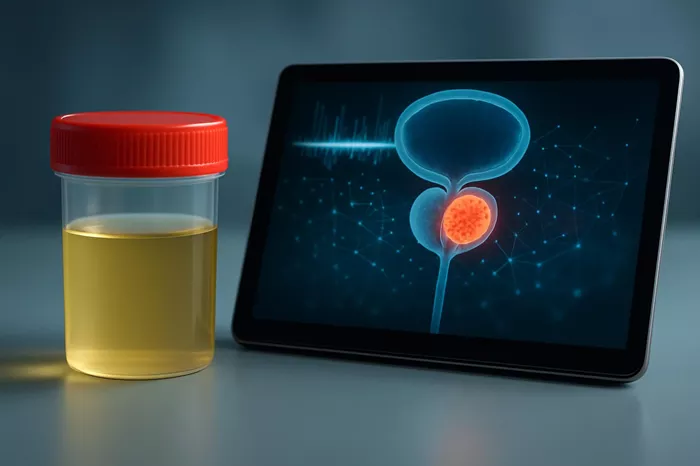
Recent advances in medical research have introduced a promising alternative—a urine test that analyzes specific RNA molecules associated with prostate cancer. Unlike the PSA test, this urine-based assay offers the potential to not only detect prostate cancer earlier but also to differentiate between slow-growing tumors and more aggressive forms. This distinction is crucial because many prostate cancers grow so slowly that they may not require immediate treatment, reducing the risk of overtreatment and related side effects.
Clinical trials have demonstrated that this RNA urine test improves detection accuracy and could become a vital tool in personalized patient care. By offering clearer insights into tumor behavior, it supports better-informed decisions on treatment plans and monitoring strategies.
Experts believe that integrating this test into routine screening could revolutionize prostate cancer management, making early detection more accessible and reducing unnecessary procedures. This innovation may also help narrow health disparities by providing a more reliable diagnostic option for all men, particularly those in high-risk groups.
In conclusion, the development of this RNA urine test represents a significant step forward in prostate cancer diagnosis. As research continues and the test becomes more widely available, it has the potential to save more lives through earlier and more accurate detection, while minimizing harm from overtreatment.
Read more:
