
David Palumbo, a fire captain in Providence, Rhode Island, witnessed one of the most frightening choking incidents of his career in 2019. An 88-year-old man dining at an Italian restaurant suddenly became unconscious. A piece of bread had blocked his windpipe, and first responders could not clear it with CPR or the Heimlich maneuver.
On the ambulance ride to the hospital, the man’s skin turned blue. Palumbo feared the worst. Using a special tool called Magill forceps, he carefully removed the bread from the man’s throat. Thanks to this quick action, the man survived and fully recovered.
Sadly, not all choking victims are so lucky. Every year, choking kills more than 4,100 Americans aged 65 or older. Older adults make up about 75% of all choking deaths in the U.S., according to federal health data. While the rate of death has stayed mostly the same, the total number of deaths is rising as the population ages.
To address this, some companies now sell antichoking devices designed for older people. These products include LifeVac, SaveLix, VitalVac, and the Dechoker. But medical experts are still debating whether these devices work well or are safe.
Dr. Nathan Charlton, a University of Virginia emergency medicine professor and American Red Cross first aid advisor, says there is limited proof that these devices help. The Red Cross is still studying them.
Why Are Older Adults More at Risk of Choking?
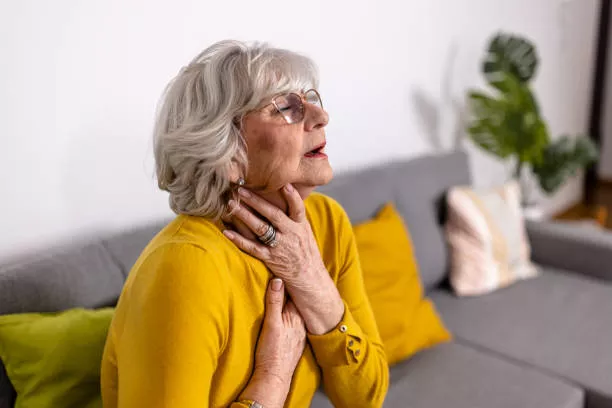
Choking happens when food or another object blocks the windpipe, stopping air from reaching the lungs. Signs include clutching the neck and being unable to talk. Brain damage can begin after four minutes without air, and death can follow soon after.
Older people are more likely to choke for several reasons. Their mouth and throat muscles weaken with age. They also produce less saliva, which helps swallowing. Certain diseases and medicines can make swallowing harder. Dentures can add to the risk.
How to Prevent and Respond to Choking
To lower the risk of choking, cut food into small pieces, chew slowly, drink liquids during meals, and avoid talking or laughing while eating.
If someone chokes, first aid often begins with back slaps—sharp blows between the shoulder blades. The Heimlich maneuver is another common method. It involves standing behind the person, wrapping your arms around their belly, and making quick upward thrusts to force air from the lungs and clear the blockage.
The American Red Cross advises alternating five back blows with five abdominal thrusts when helping someone choke.
But what if the choking person is alone? Some try to perform the Heimlich on themselves by pressing their abdomen against a chair or countertop. However, older adults may not be able to do this easily.
Are Antichoking Devices the Solution?
Antichoking devices usually look like a mask connected to a tube or a bellows with a handle. They cost between $30 and $100. The user places the mask over their face, pushes down, then pulls up on the handle. This is meant to create suction to remove the blockage.
However, these devices are not risk-free. Some reports show they can hurt the tongue or cause bleeding and swelling in the throat. The U.S. Food and Drug Administration (FDA) has received complaints about some devices not working well and causing bruises on the face and lips.
In 2021, the FDA inspected one company, Dechoker, and issued a warning due to injury reports. While these devices are registered with the FDA, that does not mean they are officially approved or endorsed. In fact, the FDA warned consumers last year that no over-the-counter antichoking devices have proven safety or effectiveness.
Arthur Lih, CEO of LifeVac, said the FDA’s actions were due to many different devices of varying quality entering the market.
More Research Is Needed, Experts Say
Currently, even manufacturers agree that traditional first aid—back blows and abdominal thrusts—should come first. The special forceps tool used by Palumbo is not recommended for general use.
Thousands of nursing homes and emergency agencies have bought these new devices. For example, Acworth, Georgia police now keep LifeVac devices in every patrol car after an officer saved a choking elderly woman using her own device.
Manufacturers claim thousands of lives have been saved worldwide, but proving how well the devices work is difficult. Dr. Cody Dunne, a University of Calgary researcher, says current evidence mainly comes from case reports or small tests on mannequins and cadavers.
“We are starting to build the case,” Dunne said. But he emphasized that larger studies comparing nursing homes with and without the devices are needed.
He also pointed out that the evidence for old techniques like the Heimlich and back blows is still improving. In fact, a study he co-authored last year found back blows work better than the Heimlich or chest compressions.
“We are only now getting good evidence on traditional choking treatments, let alone new devices,” he said.
Related topics:
Over 14 Million Children Worldwide Miss Life-Saving Vaccines
Weight Loss Drugs May Restore Testosterone in Obese Men, Study Shows
