
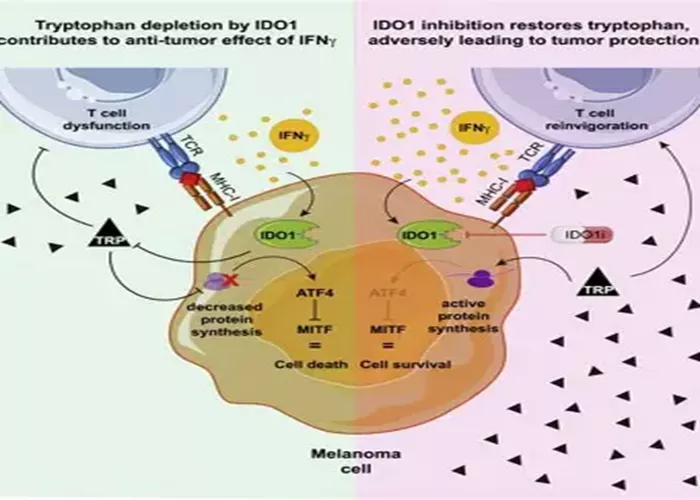
A team from the University of Texas at Arlington has found that the enzyme IDO1 plays a key role in cholesterol metabolism. Experiments confirmed that inhibiting IDO1 activity can effectively maintain healthy cholesterol levels, offering new hope for treating major diseases like heart disease, diabetes, and cancer. The study was published in Langmuir, a journal of the American Chemical Society.
The research revealed that blocking IDO1 significantly suppresses inflammatory responses in macrophages. This regulatory mechanism is crucial, as chronic inflammation is a common driver of diseases including heart disease, cancer, diabetes, and even Alzheimer’s.
Inflammation, a natural defense against infection, can spiral out of control under prolonged stress, trauma, or infection—damaging cell function like wildfire. During this process, macrophages lose their ability to metabolize cholesterol normally, triggering a range of chronic illnesses. The study found that inflammation activates IDO1, which produces kynurenine, disrupting how macrophages process cholesterol. Shutting down IDO1 with inhibitors restores macrophages’ cholesterol metabolism. Notably, the team also discovered that nitric oxide synthase synergizes with IDO1, suggesting targeting both enzymes could revolutionize treatments for millions with inflammation-driven diseases.
The team noted that excessive cholesterol buildup in macrophages leads to artery blockages, heart disease, and more—and they’ve identified IDO1 as a key culprit.
Researchers are now exploring the network between IDO1 and cholesterol regulation, screening for other involved enzymes. Developing safe, effective IDO1 inhibitors could open the door to preventing inflammation-related diseases.
Related topics:
Many Older Men Avoid Discussing Urinary Incontinence With Doctors
