
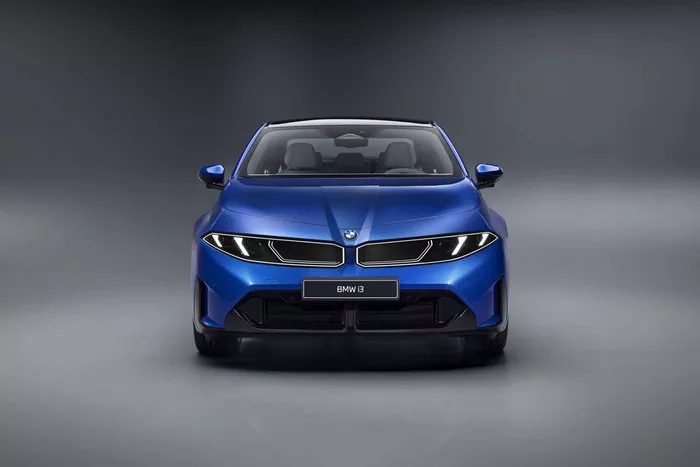
BMW’s first fully electric M3 is expected to redefine the performance ceiling of the iconic sedan, with early estimates indicating a staggering output of between 800 and 900 horsepower when it finally পৌঁrs production.
While the official debut remains at least a year away, newly surfaced digital renderings offer a detailed glimpse of the upcoming model, internally codenamed ZA0. The vehicle will be built on BMW’s next-generation Neue Klasse platform, aligning closely with recent prototype sightings and the brand’s evolving design language.
The exterior design reflects the Neue Klasse aesthetic first introduced on the i3 sedan concept, characterized by a wider interpretation of BMW’s signature kidney grille and a more streamlined, modern surface treatment. At the same time, the electric M3 incorporates distinctive M-specific styling cues, including a more aggressive front bumper with enlarged air intakes, sharper contours, and a lower, more planted stance.
One of the standout elements is a sculpted power dome hood, a design reference to earlier combustion-powered M3 generations such as the E46 and E92. Additional performance-oriented details include aerodynamic M side mirrors and yellow-tinted headlights, reinforcing the car’s motorsport-inspired identity.
BMW has confirmed that the electric M3 will feature a quad-motor powertrain, distinguishing it from the single- and dual-motor configurations planned for standard Neue Klasse models. This advanced setup is expected to provide all-wheel drive as standard, along with highly adaptable torque distribution. Reports suggest the system may even disengage the front motors under certain driving conditions to mimic the rear-wheel-drive characteristics traditionally associated with the M3.
To support its high-performance credentials, the model is likely to be equipped with a bespoke battery pack offering more than 100 kWh of usable capacity. This larger battery is designed to balance everyday usability with sustained performance during high-demand scenarios such as track driving.
BMW is also reportedly prioritizing weight reduction despite the added mass of the battery system. Test vehicles have been spotted using lightweight natural-fiber composite materials for the roof, helping to offset weight and maintain agility.
If performance projections are realized, the electric M3 would surpass the 738-horsepower BMW XM Label Red, making it the most powerful production M car ever built.
The automaker is also expected to expand its quad-motor EV architecture to additional models, including a next-generation electric X3 M SUV currently believed to be in development on the same Neue Klasse platform.
Although the latest renderings remain unofficial, they provide one of the clearest indications yet of BMW’s electrified direction for its M division. If current expectations hold, the ZA0-generation M3 could mark a significant turning point in the evolution of BMW’s high-performance lineup.
