
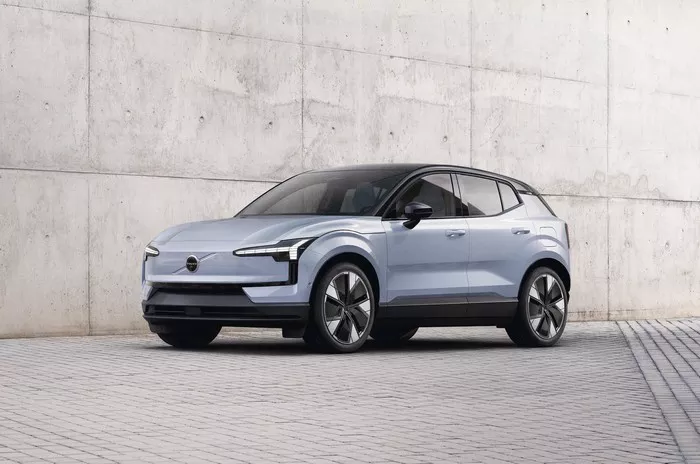
Volvo has confirmed that its compact electric SUV, the EX30, will no longer be offered in the U.S. market. The announcement, verified by a company spokesperson to InsideEVs on Monday, follows earlier reports from The Drive indicating that dealers had been notified of the model’s cancellation.
The decision adds to a growing trend of EV delays and discontinuations in the U.S. market. Recent examples include Ford halting production of the F-150 Lightning, Hyundai scaling back its Ioniq 6 sedan, and Honda removing three upcoming models before production even began.
The EX30 faced significant hurdles from the outset. Volvo initially aimed for a competitive $35,000 starting price for the small, stylish crossover. However, the Biden administration’s 100% tariff on China-made EVs disrupted those plans, causing delays and forcing Volvo to shift U.S. production to Europe. By the time the EX30 launched, prices had climbed, with test vehicles nearing $50,000—well above the intended entry-level range. Volvo later introduced a $40,000 entry model, but it was insufficient to sustain U.S. sales.
The EX30 also struggled with reliability and design concerns. Owners and reviewers cited software bugs, poorly designed technology, and a battery recall, with Edmunds labeling it “an absolute tech nightmare” during long-term testing. Combined with stiff competition in the EV segment, the model failed to secure a foothold in the market.
Industry analysts note that broader market dynamics are also influencing these decisions. Incentives and regulatory pressures that once drove EV adoption have weakened, giving automakers more discretion to discontinue models that underperform or no longer align with their strategic priorities.
Volvo is not abandoning EVs entirely. While the EX30 and its more rugged EX30 Cross Country variant will be withdrawn from U.S. sales after the 2026 model year, the company remains committed to expanding its electric lineup. Upcoming models such as the upgraded EX90 and the new EX60—offering around 400 miles of range and carefully considered dimensions—show promise for U.S. consumers.
