
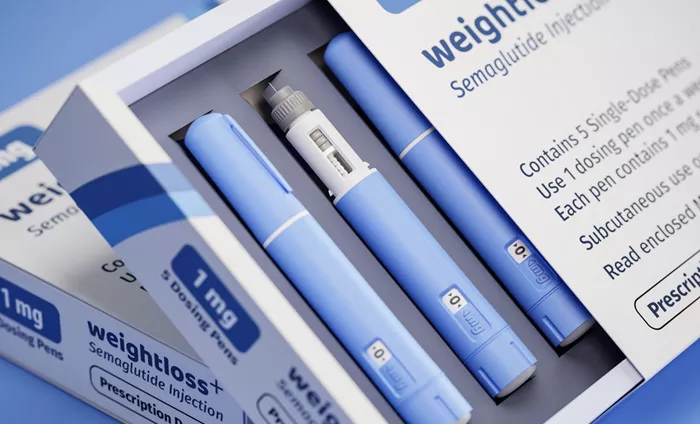
Popular weight-loss medications known as GLP-1 receptor agonists (GLP-1 RAs), including semaglutide (Ozempic) and dulaglutide (Trulicity), show similar effectiveness across patients of varying ages, races, and starting body weight, according to a new analysis led by researchers at the Johns Hopkins Bloomberg School of Public Health. The study also found that women experience slightly greater weight loss than men when using these drugs.
The researchers reviewed 64 clinical trials involving tens of thousands of patients. On average, women taking GLP-1 RAs lost approximately 11% of their starting weight, while men lost around 7%. In contrast, outcomes were largely consistent across different age groups (under 65 versus 65 and older), racial and ethnic backgrounds, baseline body mass index (BMI), and initial HbA1c levels, a measure of long-term blood sugar control.
“These results should give clinicians and patients confidence that GLP-1 RAs work effectively across diverse populations, though women appear to see modestly greater benefits than men,” said Hemal Mehta, PhD, associate professor in the Bloomberg School’s Department of Epidemiology and senior author of the study.
The researchers suggest that the slightly higher effectiveness in women may be linked to interactions with estrogen, differences in drug metabolism, and generally lower median body weight in women.
GLP-1 is a hormone released by the gut after meals that suppresses appetite and stimulates insulin release, helping lower blood glucose levels. While the hormone itself is unsuitable as a drug due to its short half-life, long-acting GLP-1 receptor agonists have been developed over the past two decades. These medications are now commonly prescribed for obesity, type 2 diabetes, and cardiovascular risk reduction.
The analysis did not include tirzepatide (Zepbound), which also mimics the hormone GIP, in addition to GLP-1.
Despite their wide-ranging benefits, GLP-1 RAs do not produce the same level of weight loss for all patients. This study aimed to clarify whether factors such as age, race, or starting weight might influence outcomes. Researchers systematically reviewed published clinical trials comparing GLP-1 RAs to placebo or other drugs, analyzing subgroups to detect potential variations. For example, the analysis of age-related differences included seven trials covering 4,314 patients, while sex-based differences were assessed across six trials involving 19,906 patients.
The findings showed an average weight loss of 10.88% of initial body weight for women and 6.78% for men, a statistically significant difference. Across other subgroups—age, race, ethnicity, initial BMI, and initial HbA1c—weight loss outcomes were similar, indicating no meaningful clinical differences.
“The popularity and cost of GLP-1 RAs make it critical to understand their benefits in real-world practice, particularly for patient populations that may be underrepresented in clinical trials,” said G. Caleb Alexander, MD, professor at the Bloomberg School’s Department of Epidemiology and corresponding author of the study.
The study, titled “Heterogeneity of Treatment Effects of Glucagon-Like Peptide-1 Receptor Agonists for Weight Loss Among Adults: A Systematic Review and Meta-Analysis,” was co-authored by G. Caleb Alexander, Xuya Xiao, Sophie Dilek, Sydney Lewis, Qilin Deng, Minji Kim, Dami Bolanle, Ian Saldanha, and Hemalkumar Mehta. It was published online in JAMA Internal Medicine on March 2.
