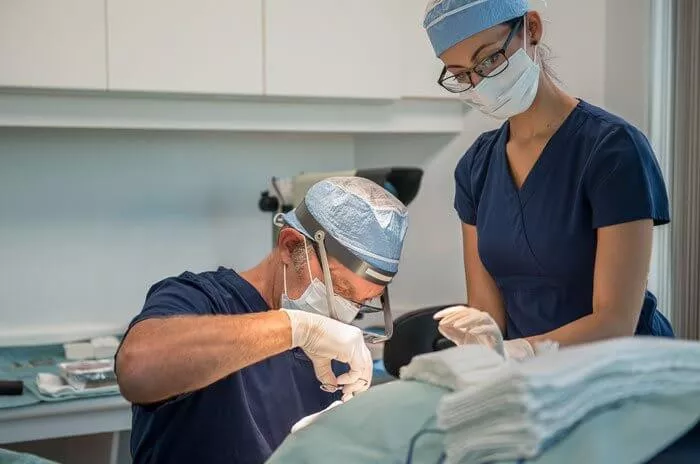
Medical tourism has surged in recent years as patients increasingly travel abroad for procedures that are often more affordable than in their home countries. Among the most sought-after treatments is hair transplantation, with Istanbul emerging as one of the world’s most prominent destinations for those seeking restoration services at comparatively lower costs.
Turkey’s largest city now hosts a wide network of clinics designed specifically for international patients, combining specialized medical expertise with travel-friendly services. Facilities such as Smile Hair Clinic, founded by two Turkish physicians in Istanbul’s Ataşehir district, illustrate how the country has positioned itself at the center of a rapidly expanding global market.
Turkey’s Rise as a Hair Restoration Destination
Turkey routinely attracts patients from the United Kingdom, Europe, the United States, and the Middle East, earning a reputation as a hub for advanced hair restoration procedures such as follicular unit extraction (FUE) and Sapphire FUE techniques.
Several factors explain the country’s appeal. Chief among them is the balance between cost and quality. A full hair transplant in Turkey typically ranges from about $1,500 to $4,500, depending on the number of grafts, the surgical method used, and the level of physician involvement. Even at higher price points, these procedures often cost significantly less than comparable treatments in Western Europe or North America.
Equally important is the prevalence of highly specialized clinics that focus exclusively on hair restoration. This single-discipline model allows medical teams to refine techniques through large procedure volumes, contributing to operational efficiency and technical consistency.
Turkey has also invested heavily in infrastructure that supports medical tourism. Many clinics offer all-inclusive packages that cover accommodation, airport transfers, translation services, and follow-up care—streamlining the process for international visitors and reducing logistical barriers.
How Modern Hair Transplant Procedures Work
Hair transplant clinics in Istanbul commonly provide minimally invasive procedures such as FUE, Micro FUE, Sapphire FUE, and, in some cases, Direct Hair Implantation (DHI). While techniques vary, the overall process follows a similar structure.
Before surgery, doctors assess patient photographs, medical histories, and expectations to determine donor hair availability and design an appropriate hairline. On the day of the procedure, the donor area—usually the back of the scalp—is numbed using local anesthesia, allowing patients to remain awake but comfortable.
Medical teams then extract individual grafts using micro-instruments designed to reduce scarring and protect follicles. Depending on the treatment plan, grafts are implanted using Sapphire blades or DHI tools to ensure precise placement, particularly when existing hair must be preserved.
Following the procedure, patients typically return to their accommodations and revisit the clinic the next day for a first wash and evaluation. Clinics provide detailed aftercare instructions and conduct remote follow-ups over several months to monitor progress.
Transplanted hair commonly sheds within a few weeks—a normal phase known as “shock loss”—before regrowth begins around the third month. Noticeable density improvements generally appear between nine and twelve months after surgery.
Inside Smile Hair Clinic’s Approach
Smile Hair Clinic was established in 2018 by Dr. Gökay Bilgin and Dr. Mehmet Erdoğan, both trained medical doctors who specialized in hair restoration and aesthetic medicine before founding the center.
Dr. Bilgin studied at Istanbul University-Cerrahpaşa and developed his early career within major Turkish hospital networks, focusing on transplantation and aesthetics. Dr. Erdoğan, a graduate of Yeditepe University’s Faculty of Medicine, pursued a similar specialization, leading the two physicians to launch their joint practice.
The clinic describes its methodology as a three-stage framework—analysis, execution, and continuous improvement—emphasizing detailed pre-operative planning, structured surgical protocols, and long-term patient follow-up.
Located in a modern facility designed around the workflow of hair transplantation, the clinic integrates consultation areas, operating rooms, and recovery spaces in a layout intended to enhance both efficiency and patient comfort. International coordination teams assist visitors with travel logistics, including hotel arrangements and multilingual support.
Understanding Pricing and Treatment Packages
While individual treatment costs vary depending on each patient’s needs, industry sources indicate that many Istanbul clinics offer FUE-based procedure packages ranging roughly between $2,000 and $3,600.
These packages often include:
- Pre-operative consultation and hair analysis
- The transplant procedure itself, frequently involving 3,000–4,000 grafts when suitable
- Airport, hotel, and clinic transfers
- Two to three nights of accommodation
- Post-operative medications and initial follow-up care
- Remote monitoring through photos or virtual consultations
Lower pricing compared with Western countries is largely attributed to currency exchange differences, labor costs, and the high volume of procedures performed in Turkey’s specialized centers rather than reduced medical standards.
Key Considerations for Prospective Patients
Experts caution that not all clinics operate at the same level, making thorough research essential before committing to treatment abroad. Prospective patients are advised to verify that qualified physicians—not only technicians—are directly involved in surgical planning and supervision.
Reviewing doctor credentials, reading independent patient testimonials, and consulting with clinic representatives about realistic expectations can help individuals assess whether a provider meets appropriate standards.
Although hair transplantation is generally considered safe when conducted in accredited settings, it remains a surgical procedure with inherent risks. Transparent communication about medical history, expected outcomes, and potential complications is crucial to minimizing those risks.
A Growing Sector in Global Healthcare Travel
As medical tourism continues to expand, Istanbul’s concentration of specialized clinics, competitive pricing, and patient-focused services has solidified its role as a leading destination for hair restoration.
For many travelers, the decision ultimately comes down to balancing affordability with careful provider selection—an equation that has helped shape Turkey’s reputation in the international aesthetic medicine landscape.