
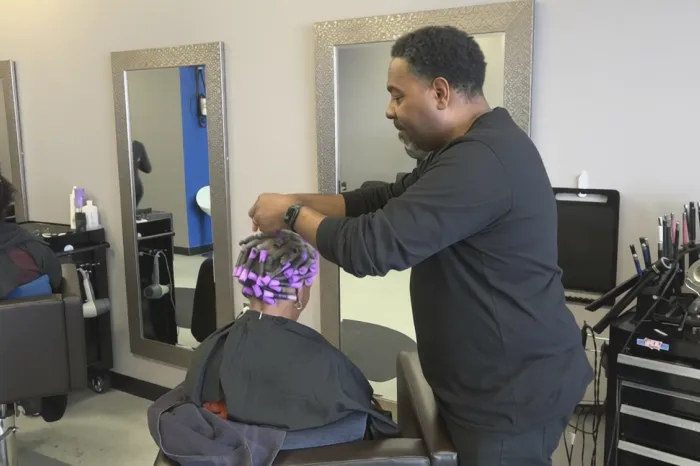
In Buffalo, New York, hair care specialists are using their skills to do more than just improve appearances— they are creating spaces for healing, empowerment, and cultural connection. This Black History Month, local stylists and educators have focused on the special role that hair plays in building community and supporting those who need it most.
Steven Daniels, a well-known local stylist and non-surgical hair replacement expert with over 35 years of experience, has been at the center of these efforts. He opened Epicenter Salon on George Urban Boulevard in Depew to provide a salon where people feel supported both inside and out. According to Daniels, his salon chair often becomes a safe space where clients can talk about their personal struggles and leave feeling more confident and happier. He believes that cosmetology is not only about making people look good but also about offering emotional support during challenging times.
Daniels also points out the importance of teaching hair care for all types of hair, especially textured hair. He hopes that cosmetology schools will include more education about different hair textures, so all stylists can support the needs of their clients. “Sometimes textured hair can seem difficult if you are not used to it, but at the end of the day, it’s just another kind of fabric to care for,” Daniels said.
Daniels is deeply connected to his family’s history in the profession. Inspired by his father, Jerry Daniels Sr., who ran a historic barbershop on Jefferson Avenue for over 70 years, he followed in his family’s footsteps to serve the Buffalo community. His story is one of carrying on a tradition that values service and connection.
Another leader in the Buffalo beauty community is Jade Wright, a local cosmetologist, educator, and owner of Model Behavior Salon on Bailey Avenue. Wright has become a mentor to young people, launching Camp B-U, a free after-school program for students in Buffalo Public Schools. This program introduces students to cosmetology and barbering, letting them try their hand at braids, twists, and other styles. Wright says the students are eager to learn, and the program gives them not only useful skills but also mentorship and a deeper understanding of their culture. For some, the program is a chance to fill in the gaps they felt as children or to build new connections.
Ashley Scott, a counselor at Build Community School, praises the partnership with Wright’s program, noting the positive impact it has on students. Participants say the experience is about more than learning to style hair— it’s about finding guidance and cultural connection from someone they can trust.
For Daniels, Wright, and others, hair care is much more than a business. It represents pride in Black culture, the sharing of knowledge, and the creation of supportive spaces for people of all backgrounds. As Wright puts it, her efforts are part of a larger goal to empower her community, and for her, this is just the beginning.
