
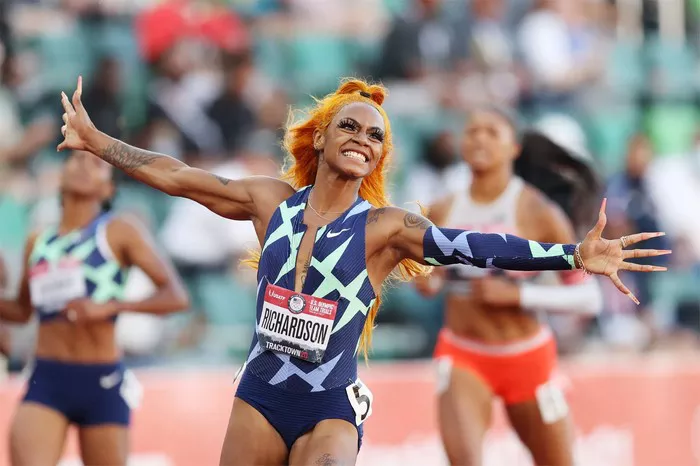
Sha’Carri Richardson, a name synonymous with raw speed and unapologetic confidence in track and field, has once again found herself at the center of public conversation—this time beyond the starting blocks. Alongside her record-breaking performances, the American sprint star has sparked widespread discussion after openly addressing her decision to undergo breast implant surgery, igniting broader debates around body image, autonomy, and the expectations placed on female athletes.
While Richardson’s athletic achievements continue to define her career, her personal choice has highlighted how elite competitors are often scrutinized not only for their results, but also for how they look. The conversation surrounding her decision reflects a larger cultural moment in sports, where questions of empowerment, femininity, and self-expression are increasingly coming to the forefront.
A Rising Star in American Sprinting
Born on March 25, 2000, in Dallas, Texas, Sha’Carri Richardson rose to national prominence as a teenage sprinting phenom. She captured headlines in 2019 after winning the NCAA women’s 100 meters, instantly establishing herself as one of the most promising talents in American athletics. Known for her explosive starts, distinctive style, and fearless attitude, Richardson quickly became a fan favorite and a symbol of a new generation of track stars.
Her journey, however, has been shaped as much by personal adversity as by athletic success. Raised primarily by her grandmother, Richardson has spoken candidly about overcoming hardship and using running as both an outlet and a source of purpose. The death of her mother shortly before the Tokyo Olympics in 2021 added another deeply personal chapter to her public story, strengthening her connection with fans who admire her resilience.
Addressing Breast Implants and Personal Choice
In recent interviews and through social media, Richardson acknowledged her decision to get breast implants, a choice that immediately drew public attention. While details about the procedure itself remain private, her openness about the decision has fueled discussions about body modification in professional sports.
For Richardson, the surgery represents a personal expression rather than a professional statement. She has suggested that the decision was rooted in self-confidence and a desire to feel comfortable and authentic in her own body—an assertion that resonates with many supporters who view body autonomy as a fundamental right.
Why the Decision Sparked Debate
The reaction to Richardson’s breast implants has been mixed. Many fans and fellow athletes have praised her for embracing her individuality and reinforcing the idea that women in sports should not be boxed into narrow definitions of appearance. Others, however, have criticized the move, arguing it reflects societal beauty pressures—an argument that underscores how complex and polarized conversations about body image remain.
At the heart of the debate are several recurring themes:
- Self-confidence and empowerment: Supporters argue that feeling good about one’s body can enhance mental well-being and performance.
- Femininity in sports: Richardson’s choice challenges outdated notions that elite athletes must conform to a single, utilitarian image.
- Public scrutiny: As a high-profile athlete, even deeply personal decisions are often dissected in the public arena.
Body Positivity in Elite Athletics
Richardson’s experience has reignited conversations about body positivity in sports, particularly for women competing at the highest level. The movement emphasizes authenticity, self-acceptance, and freedom of choice—values that clash with long-standing expectations that athletes prioritize performance above all else, including personal identity.
Advocates argue that supporting athletes’ personal decisions helps create a healthier, more inclusive sporting culture, where success is not measured solely by medals but also by well-being and self-worth.
Impact on Performance and Career
Concerns have been raised about whether cosmetic surgery could affect Richardson’s performance. The sprinter herself has dismissed such notions, maintaining that her physical capabilities and competitive focus remain unchanged. Sports psychologists note that increased confidence can, in some cases, translate into improved performance—suggesting that personal comfort and athletic excellence are not mutually exclusive.
The Bigger Picture
Sha’Carri Richardson’s decision to undergo breast implant surgery goes beyond celebrity curiosity. It reflects the evolving conversation around autonomy, identity, and the pressures faced by women in elite sports. By speaking openly, Richardson continues to challenge conventional norms, reinforcing that athletes are multifaceted individuals—not just competitors defined by times and titles.
As the discussion continues, her story serves as a reminder that the right to self-definition remains as important off the track as excellence is on it.
