
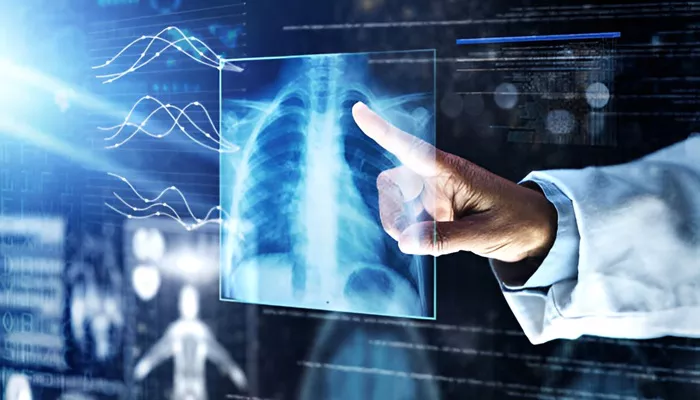
Machine learning engineer Ikenna Odezuligbo is leading a pioneering effort to transform cancer diagnostics through advanced technology. He is exploring how quantum computing can tackle the massive data-processing challenges in medical imaging.
Odezuligbo’s work combines artificial intelligence (AI) and quantum computing to create faster, more accurate ways to detect cancer. In a statement to Society Plus, he said:
“AI has already transformed medical diagnostics, and quantum computing could take it even further by improving both speed and accuracy.”
Medical imaging techniques—such as MRI, CT scans, PET scans, and X-rays—are essential for detecting tumors and other abnormalities. While AI has improved these methods by automating disease detection and reducing human error, Odezuligbo is exploring the next frontier: quantum machine learning (QML).
Unlike classical AI, which relies on conventional computers, QML uses the principles of quantum mechanics to process enormous amounts of medical data more efficiently. This could allow for faster pattern recognition, earlier detection, and more precise diagnoses, potentially changing the future of cancer care.
Odezuligbo also noted that quantum AI is still in its early stages. Most researchers access quantum processors via cloud platforms provided by companies like IBM and Google, testing algorithms on systems with limited numbers of qubits. Despite these early limitations, the potential for quantum AI to revolutionize medical imaging is immense.
Related topic:
