
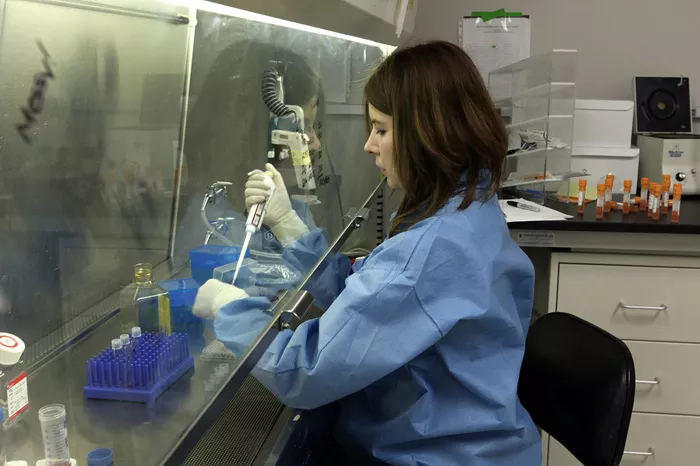
A breakthrough gene therapy is offering new hope for patients with a form of leukemia long considered untreatable. Early trials show that the treatment can reverse the disease in both children and adults, marking a potential turning point in cancer care.
A Global Health Challenge
Leukemia, a cancer of the blood-forming tissues such as bone marrow, remains a major global health concern. In 2021, there were approximately 460,000 new cases and more than 320,000 deaths worldwide. While incidence continues to rise, a new therapy developed by scientists at University College London (UCL) and Great Ormond Street Hospital (GOSH) is showing remarkable promise for patients who previously had no treatment options.
How the Therapy Works
Traditional immunotherapies, including earlier CAR T-cell treatments, typically modify a patient’s own immune cells to attack cancer. T-cell leukemia, however, presents a unique challenge: the cancer originates in the immune cells themselves. This makes engineering the patient’s own T-cells difficult, as they may attack one another or fail to persist long enough to eliminate the cancer.
The new treatment, called BE-CAR7, uses a different approach. Instead of the patient’s own T-cells, it employs healthy donor T-cells, which are genetically reprogrammed in the lab using base editing—a precise form of DNA editing. Scientists disable markers that could cause the donor cells to be rejected or attack one another and introduce a “chimeric antigen receptor” that enables the cells to target and destroy cancerous T-cells.
Once infused into the patient, these modified T-cells act as a living drug, hunting and killing malignant cells. Many patients then receive a bone marrow transplant to rebuild a healthy immune system.
Early Success Stories
The first patient to receive BE-CAR7 was a 13-year-old girl from Leicester whose T-cell acute lymphoblastic leukemia (T-ALL) had resisted chemotherapy and a prior bone marrow transplant. Facing palliative care, she achieved undetectable cancer levels just 28 days after treatment.
Encouraged by this result, the trial expanded to include eight additional children and two adults across major hospitals in London. According to recent data presented at a major hematology meeting, about 82% of patients achieved deep remission, and roughly 64% remain disease-free, with some maintaining remission for up to three years.
Understanding Leukemia
Leukemia occurs when the bone marrow produces excessive abnormal white blood cells, which cannot fight infection and crowd out healthy blood cells. The disease is classified as acute or chronic and lymphocytic or myelogenous, depending on growth rate and cell type. Symptoms often include fatigue, frequent infections, and easy bruising.
It is the most common cancer in children but is diagnosed more frequently in adults, particularly older adults. Treatment typically involves chemotherapy, targeted therapies that block specific cancer pathways, and immunotherapy to strengthen the immune response.
Why BE-CAR7 is Groundbreaking
BE-CAR7’s “universal” approach—using donor rather than patient cells—overcomes key obstacles in treating T-cell leukemia. Earlier methods struggled because patient-derived T-cells could destroy each other before attacking cancer. The base-edited donor cells avoid this problem, creating a more effective therapy.
Side effects reported in trials included temporary low blood counts, skin rashes, and immune system weakness. Researchers noted that most side effects were manageable, though patients remained vulnerable to viral infections until immune recovery.
Related topic:
