
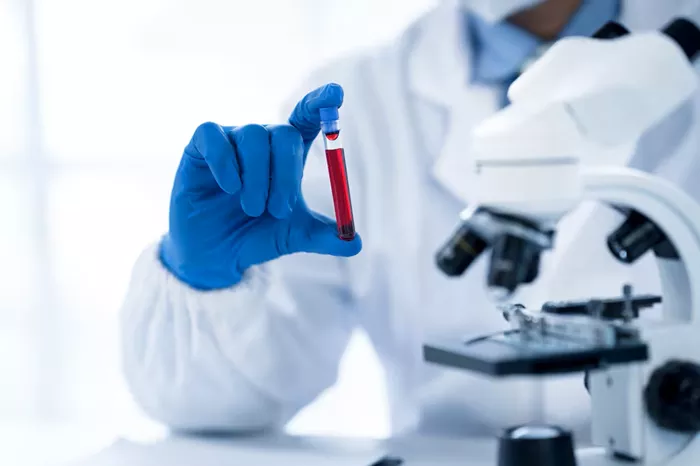
Progress in reducing the global burden of cancer remains slow, yet a new blood test has generated unusual levels of optimism. Researchers hope it could make routine screening more effective by detecting cancers earlier, when treatment is most likely to succeed.
The Galleri blood test, developed by US company Grail, has attracted international attention after early trial results were described as “exciting” by researchers. According to a press release, the test—currently being trialled by the NHS—can detect signals from 50 cancers and correctly identify the disease in 62% of people who receive a positive result. It also appears highly accurate at ruling out cancer, with a reported 99.6% success rate among disease-free participants.
At first glance, these figures suggest a significant advance. But a closer look raises important questions about what they truly mean. Early promise does not always translate into real-world performance.
The Pathfinder 2 trial, which involved 23,161 people over 50 from the US and Canada with no prior cancer diagnosis, produced the widely cited figures. Of the 216 participants who tested positive, 133 were later confirmed to have cancer, giving the test a “positive predictive value” (PPV) of 62%. This answers the key question: “If I test positive, what are the chances I actually have cancer?” It also implies that 38% of positive results were false alarms.
Equally important is specificity, which measures how often a test correctly identifies people without cancer. The Galleri test performed strongly here, with 99.6% of disease-free participants receiving a correct negative result. But even this high rate has implications: if all 26 million people over 50 in the UK were tested, it could still generate more than 100,000 false positives, causing anxiety and unnecessary follow-up procedures.
Sensitivity—how many true cancer cases the test detects—was reported at just 40.4%, meaning the test missed nearly three in five cancers that appeared within a year. This limitation could disappoint those hoping for a universal screening tool and risks falsely reassuring patients who test negative.
Statisticians note that PPV, specificity, and sensitivity are estimates, each with uncertainty. Tests also often perform worse outside controlled trials, meaning real-world accuracy could be lower.
Where does this leave the Galleri test? It may become a useful supplement to future screening programs, provided negative results are not treated as definitive. Yet its low sensitivity means many cancers would still go undetected. The test is also expensive—US$949 (NZD$1,688) in the US—and there is no evidence yet that widespread use reduces cancer deaths.
Early data is encouraging, but the excitement should be tempered. The Galleri test may be a step forward in cancer detection, but it is not a standalone solution.
Related topic:
