
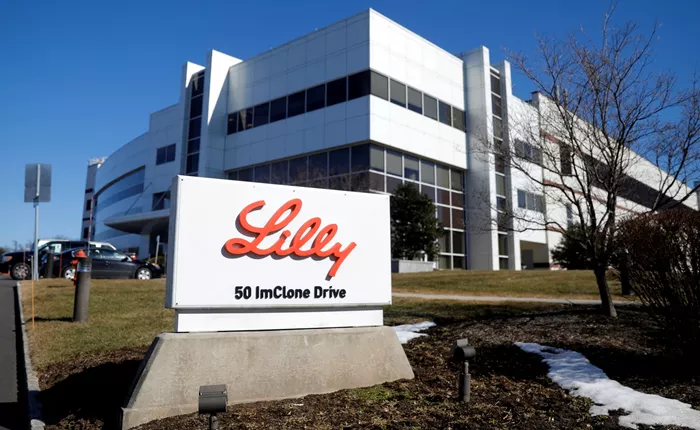
Eli Lilly reached a historic milestone on Friday, becoming the first healthcare company in the world to achieve a $1 trillion market value. The stock briefly crossed the mark during morning trading before pulling back slightly. Shares last traded near $1,048.
This makes Eli Lilly only the second U.S. company outside the technology sector to reach a trillion-dollar valuation. The first was Warren Buffett’s Berkshire Hathaway.
Much of Eli Lilly’s rise comes from two highly successful medicines: Mounjaro, a diabetes treatment, and Zepbound, a weight-loss drug. Both products have seen rapid demand and strong sales growth. The company’s stock has climbed more than 36% this year as interest in these treatments continues to expand.
In the third quarter, Mounjaro generated $6.52 billion in revenue, a 109% increase from the previous year. Zepbound brought in $3.59 billion during the same period, rising 184% year over year.
Eli Lilly expects momentum to continue as more patients gain insurance coverage and as future regulatory approvals widen access. The company also plans to introduce an oral version of its weight-loss drug next year. This option may appeal to patients who prefer a pill instead of an injection.
Industry analysts estimate that the global market for weight-loss medications could exceed $150 billion by the early 2030s. Other major players are also investing heavily in the sector. Novo Nordisk, maker of Ozempic and Wegovy, remains a leading competitor. Pfizer has also entered the market after acquiring obesity-drug developer Metsera for $10 billion.
Eli Lilly has been a major force in medicine for nearly 150 years. Founded in 1876, the company introduced the first commercial insulin in 1923. It went public in 1952 and later released major treatments such as Prozac and one of the earliest polio vaccines.
The company’s latest chapter of growth began in May 2022, when it received approval for tirzepatide, now sold as Mounjaro. In late 2023, the same drug was approved for obesity under the name Zepbound. By 2024, Mounjaro’s annual sales reached $11.54 billion, while Zepbound produced $4.93 billion.
Eli Lilly’s rapid rise suggests that demand for weight-loss and diabetes treatments will shape the future of the global healthcare market.
Related topics
