
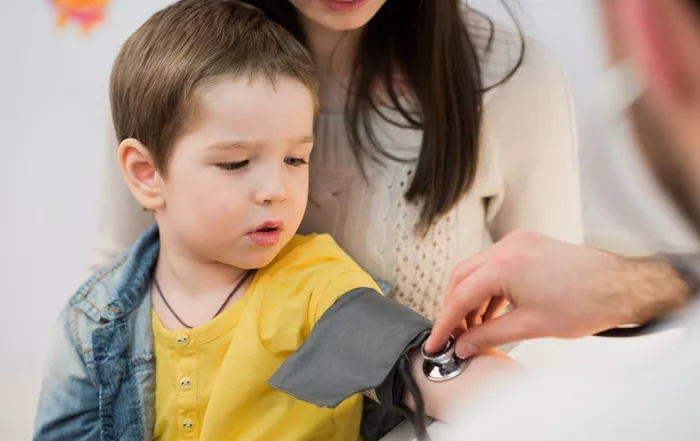
Global cases of hypertension in children and adolescents have almost doubled over the past two decades, according to new research published in The Lancet Child and Adolescent Health. The study, which reviewed data from 96 studies across 21 countries, found that elevated blood pressure is no longer a rare condition in youth—and may pose serious health consequences later in life.
Researchers reported that in 2000, roughly 3.4% of boys and 3% of girls were affected by hypertension. By 2020, the prevalence rose to 6.5% and 5.8%, respectively. Dr. Peige Song of Zhejiang University School of Medicine, one of the study’s authors, emphasized that while the trend is concerning, hypertension in children is a modifiable risk factor.
“Better screening, earlier detection, and greater focus on prevention—particularly around healthy weight and nutrition—can help us intervene before complications develop,” Song said.
Why High Blood Pressure Is Rising in Children
Experts say the increase has multiple causes. Childhood obesity remains a major driver because it is linked to insulin resistance, chronic inflammation, and changes in vascular function. Diets high in sodium and ultraprocessed foods also contribute to higher risk, as do inadequate sleep, sedentary behavior, and family history.
Modern lifestyle patterns, including increased screen time and reduced physical activity, may further exacerbate the problem. Environmental exposures are also emerging as a potential contributor. Dr. Mingyu Zhang of Harvard Medical School, who was not involved in the analysis, noted that pollutants such as PFAS—also known as “forever chemicals”—have been associated with elevated blood pressure in children when exposure begins before birth.
Supporting Healthy Behaviors Without Stigma
Health professionals caution families not to assume high blood pressure is only an adult concern. At the same time, they emphasize that addressing risk in children should focus on supportive, rather than restrictive, strategies.
Pediatric dietitian Jill Castle advises encouraging nutritious eating patterns while maintaining flexibility. She recommends regular family meals, avoiding labeling foods as “good” or “bad,” and steering clear of practices like pressuring children to clean their plates or rewarding them with sweets. Such approaches, she says, help foster a positive long-term relationship with food.
Conclusion
One of the study’s notable findings is the prevalence of “masked” hypertension—cases in which a child’s blood pressure measures normal in a clinical setting but elevated at home. By incorporating both clinic and at-home readings, the research revealed that masked hypertension was the most common type identified.
“This indicates that many children with true hypertension may go unnoticed if evaluations rely solely on office measurements,” Zhang explained.
The findings highlight the need for improved, scalable approaches to blood pressure monitoring in children. According to Song, a single reading may be insufficient, and more comprehensive strategies may be necessary to ensure early diagnosis and appropriate care worldwide.
Related topics
