
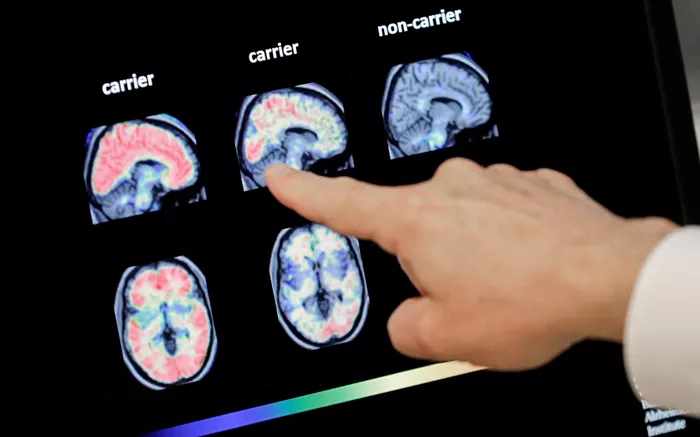
Mayo Clinic researchers have unveiled a groundbreaking tool capable of estimating an individual’s risk of developing memory and thinking problems associated with Alzheimer’s disease years before any symptoms appear. The findings, recently published in The Lancet Neurology, draw upon decades of comprehensive data from the Mayo Clinic Study of Aging, one of the world’s most detailed and population-based studies of brain health.
The new model offers clinicians and patients the potential to intervene earlier—before cognitive decline begins—marking a significant advance in Alzheimer’s prevention and management.
Understanding Risk Factors: Women and Genetic Variants
The study revealed that women face a higher lifetime risk than men of developing both dementia and mild cognitive impairment (MCI)—a condition that bridges the gap between healthy aging and dementia. MCI affects cognitive abilities such as memory and reasoning but often allows individuals to maintain independence.
Additionally, both men and women who carry the APOE ε4 genetic variant, a well-known risk factor for Alzheimer’s disease, showed increased lifetime risk.
The Science Behind Prediction
Alzheimer’s disease is characterized by two hallmark proteins in the brain: amyloid plaques and tau tangles. Recent FDA-approved treatments target amyloid, removing it from the brain to slow disease progression in people with MCI or mild dementia.
However, the Mayo Clinic research pushes boundaries further by identifying risk before any symptoms appear. According to study lead author Clifford Jack Jr., M.D., “We’re now looking even earlier—to see if we can predict who is at greatest risk of developing cognitive problems in the future.”
The prediction model integrates several key factors, including age, sex, APOE genotype, and brain amyloid levels measured through PET scans. Researchers can estimate an individual’s risk of developing MCI or dementia over a decade or across a lifetime. Among all predictors, amyloid levels were found to be the strongest indicator of lifetime risk.
Implications for Prevention and Care
Dr. Ronald Petersen, neurologist and co-author of the study, emphasized that this predictive model could become a valuable clinical tool. “It’s similar to how cholesterol levels help predict heart attack risk,” he explained. “With accurate risk estimates, patients and doctors can make informed decisions about when to begin therapy or implement lifestyle changes that delay symptom onset.”
The study’s strength lies in its population-based design. Drawing from 5,858 participants in Olmsted County, Minnesota, researchers were able to maintain long-term follow-up—even for participants who left the active study—by analyzing medical records. This approach ensured nearly complete data, providing an exceptionally detailed view of how Alzheimer’s disease progresses within a community.
According to Terry Therneau, Ph.D., senior author and lead statistician, “We found that dementia incidence was twice as high among people who dropped out compared to those who continued, highlighting the importance of continued data tracking.”
Toward Personalized Alzheimer’s Care
While the current tool remains a research instrument, it marks a major step toward personalized brain health management. Future versions may integrate blood-based biomarkers, making Alzheimer’s risk prediction more accessible and less invasive.
The research was supported by the National Institute on Aging, the GHR Foundation, Gates Ventures, and the Alexander Family Foundation. It also forms part of Mayo Clinic’s Precure Initiative, which focuses on developing predictive tools to intercept diseases before they progress.
As Dr. Petersen summarized, “Ultimately, our goal is to give people more time—to plan, to act, and to live well before memory problems take hold.”
Related topics
