
Lagos, Nigeria — In a city where uneven sidewalks, chaotic traffic, and crowded streets pose daily challenges, millions of blind or visually impaired residents face barriers to safe, independent mobility. EyeGuide, a navigation app developed by Lagos-based technologist Charles Ayere, seeks to change that reality by leveraging LiDAR sensors on modern mobile devices to detect obstacles, identify nearby people, and guide users with vocal and haptic feedback.
From concept to prototype: building EyeGuide
Ayere, a sociology graduate from Olabisi Onabanjo University, did not set out to be a tech innovator. His foray into technology began in his final year of university, driven by curiosity. After earning his degree in 2018, he pivoted to technology and now serves as CTO at an AI-driven digital marketing platform and leads web development for a Lagos fintech startup, Sofri.
The EyeGuide idea emerged in early 2024, inspired by car sensors that detect nearby objects. Ayere wondered whether a similar principle could help blind users navigate their surroundings more reliably. He identified LiDAR (Light Detection and Ranging) as the foundation for a robust, locally developed solution. Early prototypes relied on iPhone cameras using stereoscopic lens technology, but results were inconsistent, with occasional misdetections such as mistaking a picture frame for a person or failing to recognize glass doors. Ayere concluded that reliability was non-negotiable and shifted to LiDAR-based sensing.
How EyeGuide works
EyeGuide operates entirely on-device to protect user privacy. When launched, the app scans the environment and delivers voice prompts such as “turn left,” “turn right,” and “collision detected,” accompanied by vibrations that intensify as obstacles approach. The system identifies objects, reports their proximity in meters, and can detect human presence to alert users to nearby people. Practical controls include using the iPhone’s volume buttons to start or stop the app, with automatic pausing when the phone is idle.
A collaborative development process
From the outset, Ayere emphasized collaboration with blind community members in Yaba, Lagos. Test participants helped refine vibrations, audio feedback, and overall usability. Their feedback continues to shape EyeGuide’s evolution. One user, Abiodun Joseph, described the experience as engaging but noted that excessive vibration and alerts could be overwhelming in busy environments. Joseph suggested adjustable sensitivity to tailor the app’s responsiveness to different settings.
In response, EyeGuide offers customizable sensitivity settings, allowing users to determine how close an obstacle must be before warnings are issued. Ayere describes feedback as a continuing cycle of improvement.
Scope and future directions
Currently, EyeGuide runs on iOS devices. Ayere plans to broaden compatibility to Android devices and is developing smart glasses that connect to EyeGuide via Bluetooth. The glasses would rely on ultrasonic sensors—more affordable and energy-efficient than LiDAR—to extend functionality to users who prefer hands-free operation or cannot carry a phone at all times.
Cost considerations and accessibility
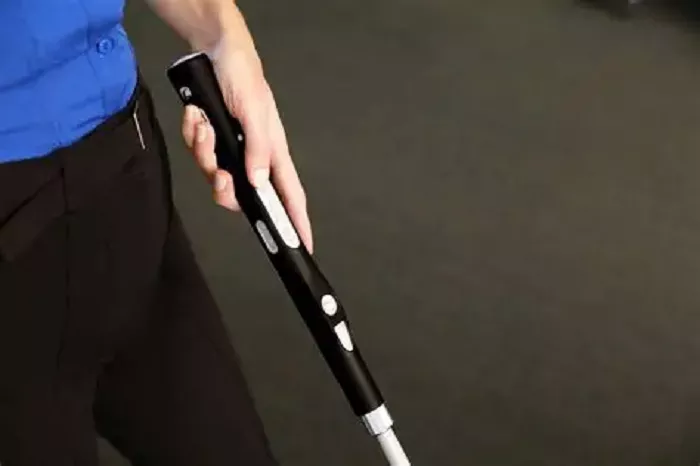
Cost remains a central issue in Nigeria’s assistive technology market. A WeWALK Smart Cane, a commonly available device, costs around ₦752,000, with imported alternatives around ₦90,000—significant figures against a national minimum wage of ₦70,000 per month. The market lacks government subsidies, underscoring the imperative for affordable, locally produced solutions. EyeGuide’s current software is free, and Ayere intends to keep EyeGuide itself free while pricing the smart glasses to cover production costs.
Beyond technology: a broader accessibility agenda
Ayere frames EyeGuide within a wider context of disability rights and infrastructure. Nigeria’s Discrimination Against Persons with Disabilities (Prohibition) Act, enacted in 2018, mandates accessible public spaces but enforcement remains uneven. Across Africa, access to assistive technology is limited by cost and supply chain constraints, with estimates suggesting only 15 to 25 percent of those who need such technology have access. Ayere argues that innovation must prioritize inclusion and affordability, not profit alone.
Regional parallels and momentum
EyeGuide is part of a growing African movement to tailor assistive technologies to local environments. Projects in Kenya and Rwanda employ alternative sensing modalities, such as echolocation and ultrasonic sensing, to manage costs and improve accessibility. Initiatives like GiveTechToTheBlind connect donors with visually impaired users, expanding distribution channels where traditional markets have failed. These efforts signal a shift toward locally developed, user-centered solutions.
Conclusion
EyeGuide represents more than a technological innovation; it embodies an inclusive approach to mobility, where devices and design are shaped by the needs of those who navigate the world without sight. Ayere’s mission is clear: accessibility should be universal, not a privilege reserved for the few.
Related topics:
