
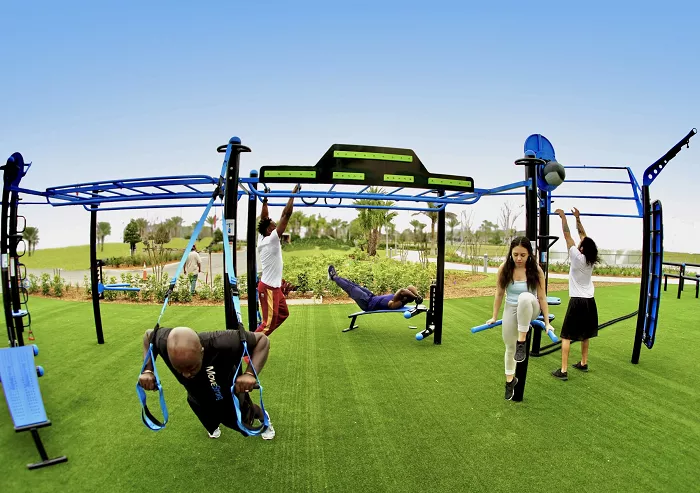
Bodyweight training represents an accessible and effective approach to physical fitness requiring no specialized equipment while delivering comprehensive health benefits across multiple physiological systems. This exercise modality utilizes gravitational resistance and strategic body positioning to build functional strength, improve muscular endurance, and enhance cardiovascular health through natural movement patterns.
The convenience factor enables consistent practice across diverse environments from home settings to travel scenarios, eliminating common barriers like cost, time constraints, and equipment availability that often hinder exercise adherence. Research indicates bodyweight exercises can produce similar physiological adaptations to traditional weight training when properly programmed with progressive challenge, making it a viable long-term fitness solution for various populations.
Examining the Physiological Advantages of Equipment-Free Exercise
Equipment-free exercise offers distinct physiological benefits beyond mere convenience, engaging multiple muscle groups simultaneously to promote functional strength development that translates directly to real-world activities. Calisthenics movements follow the body’s natural movement patterns, reducing injury risk compared to machine-based exercises that isolate muscles unnaturally and may create muscular imbalances over time.
Bodyweight training also improves proprioception and balance through integrated stabilizer muscle recruitment that enhances neuromuscular coordination and body awareness. Furthermore, the scalable nature of exercises allows seamless progression from beginner to advanced levels by manipulating leverage angles, movement complexity, and tempo variations that increase intensity without external resistance.
Implementing Foundational Upper Body Strength Exercises
Push-ups serve as cornerstone upper body exercises targeting pectoral muscles, triceps, and anterior deltoids while engaging core stabilizers for full-body integration. Proper form requires maintaining a straight line from head to heels with hands positioned slightly wider than shoulder width to optimize muscle activation and joint safety.
Elbows should track at approximately 45-degree angles from the torso during descent rather than flaring outward to protect shoulder joints and maximize chest engagement. Beginners can modify intensity by performing knee push-ups or incline variations against elevated surfaces, while advanced practitioners increase difficulty through decline positions, weighted vests, or explosive plyometric push-ups that develop power and speed.
Developing Core Stability and Abdominal Strength Through Bodyweight Exercises
Plank exercises build isometric core strength essential for spinal stability and injury prevention during daily activities and athletic movements. The standard forearm plank position demands alignment from heels to head with engaged abdominal muscles and neutral pelvis to maintain proper spinal positioning.
Variations include side planks for oblique strengthening, plank jacks for cardiovascular integration, and dynamic plank movements incorporating shoulder taps or leg lifts that challenge stability while adding movement complexity. Proper breathing patterns during plank holds oxygenate muscles while maintaining intra-abdominal pressure for spinal protection, enhancing endurance and focus throughout the exercise duration.
Executing Lower Body Dominant Compound Movements
Bodyweight squats develop lower extremity strength through functional movement patterns emphasizing proper joint alignment and muscle activation sequences. The movement initiates with hip flexion rather than knee bending, maintaining chest elevation and neutral spine throughout the range of motion to protect the lower back and engage the posterior chain effectively.
Depth should accommodate individual mobility constraints while ensuring heel contact and knee tracking over feet to maintain proper biomechanics and prevent joint stress. Advanced progressions include jump squats for power development, pistol squats for unilateral strength, and squat holds for isometric endurance training that challenges muscular stamina and mental focus.
Incorporating High-Intensity Full-Body Conditioning Exercises
Burpees provide comprehensive full-body conditioning combining strength and cardiovascular elements through sequential movements that engage multiple muscle groups simultaneously. The exercise integrates push-up positions with explosive transitions and vertical jumping components, developing power, coordination, and metabolic conditioning in a single movement pattern.
Modifications accommodate fitness levels by eliminating push-up phases or reducing impact during landing phases, while advanced variations add push-ups, jumps, or additional complexity to increase intensity. Mountain climbers develop core stability and coordination through alternating knee drives while maintaining plank positioning, with tempo variations controlling intensity from slow controlled movements to rapid metabolic conditioning sequences that elevate heart rate significantly.
Designing Progressive Training Programs for Continuous Improvement
Effective bodyweight programming incorporates principle-based progression methods rather than arbitrary repetition increases, ensuring continuous adaptation and avoiding training plateaus. Leverage adjustments, exercise complexity modifications, and tempo variations create progressive overload without external resistance, allowing for sustained progress over extended training periods.
Circuit training formats combine multiple exercises performed consecutively with minimal rest periods, enhancing metabolic response and cardiovascular benefits while maintaining muscular engagement throughout the session. Time-under-tension techniques through slow eccentric phases or isometric holds increase muscular stimulation without equipment requirements, promoting hypertrophy and strength gains through controlled movement execution and focused mind-muscle connection.
Related topics
