
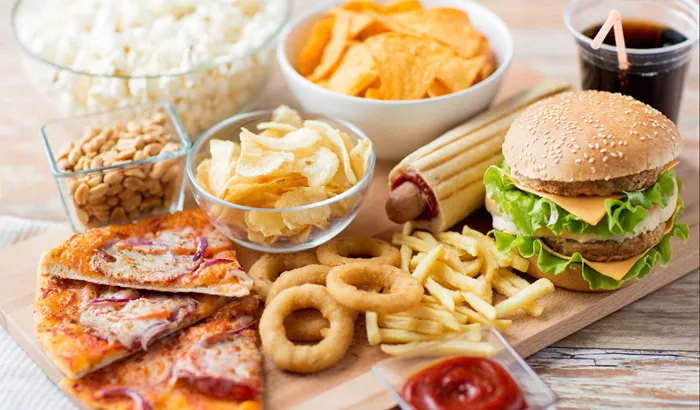
New research from the University of Copenhagen suggests that ultra-processed foods (UPFs) may have damaging effects on men’s metabolism, hormones, and fertility — even when calorie intake is identical to that of a whole-food diet. The study, published in Cell Metabolism, highlights that food quality, not just quantity, plays a decisive role in health outcomes.
The study involved 43 men aged 20 to 35, each of whom followed both an ultra-processed and minimally processed diet for three weeks. Both diets were designed to have the same proportions of calories, proteins, carbohydrates, and fats, yet the results differed dramatically in their impact on the participants’ health.
Inside the Diets: Processed vs. Whole Foods
The ultra-processed diet included ready-to-eat meals, sweetened cereals, processed meats such as sausages and cold cuts, packaged breads, flavored yogurts, snacks, and soft drinks. In contrast, the whole-food diet focused on fresh produce, eggs, meat, fish, whole grains, legumes, plain dairy, nuts, and seeds.
Even though both diets were calorically matched, men on the ultra-processed plan gained an average of two pounds of fat mass and exhibited poorer cardiovascular health indicators than those on the unprocessed diet. The researchers wrote, “Calories from unprocessed and ultra-processed foods are not equally stored or metabolized, even when controlled for macronutrient load.”
Processed Foods and Hormonal Disruption
In addition to weight gain, the study revealed a significant hormonal shift. Participants consuming ultra-processed foods showed decreased testosterone and follicle-stimulating hormone (FSH) levels, both essential for healthy sperm production. They also had higher concentrations of environmental pollutants — specifically phthalate chemicals such as cxMINP — known to impair sperm quality.
Lead researcher Jessica Preston emphasized in a statement from the Novo Nordisk Foundation that funded the project: “Our results prove that ultra-processed foods harm reproductive and metabolic health, even when not consumed excessively.” The authors concluded that UPFs are “detrimental for cardiometabolic and reproductive outcomes, regardless of excessive caloric intake.”
Expert Reactions: A Warning for Men’s Health
Dr. David Shusterman, a board-certified urologist in New York City who was not involved in the study, said the findings strengthen existing evidence linking diet quality with men’s reproductive health. “It’s not just about calories — it’s about what those calories are made of,” he explained. “Ultra-processed foods disrupt normal hormonal and metabolic functions.”
According to the World Health Organization (WHO), global obesity rates have more than doubled since 1990, while sperm count and motility have fallen sharply. Meanwhile, the Centers for Disease Control and Prevention (CDC) reports that ultra-processed foods now constitute over half of the average American diet.
Study co-author Romain Barrès noted, “We were shocked by how many bodily systems were affected, even among healthy young men. The long-term implications are alarming and suggest that nutritional guidelines must evolve to protect against chronic disease.”
Potential Long-Term and Mental Health Effects
Beyond physical health, researchers observed that moving from ultra-processed to minimally processed foods could also enhance mental well-being. However, they acknowledged limitations: the short three-week duration and reliance on participant reporting may not fully capture long-term or real-world impacts.
Dr. Shusterman added that while the study size was small, the hormonal changes observed “signal that food processing itself may carry endocrine and fertility risks worth paying attention to.”
Implications for Real-World Eating Habits
Dr. Justin Houman, a urologist at Cedars-Sinai Medical Center, agreed that the results should be interpreted cautiously but said they raise valid concerns. “Short-term dips in testosterone and sperm quality don’t necessarily prove infertility, but they indicate early warning signs that require follow-up research,” he said.
Houman pointed out that in real life, ultra-processed foods often lead to higher calorie consumption, meaning their negative effects could be even more pronounced. “In controlled settings, calorie intake is equal. But in the wild, UPFs encourage overeating, so the impact on health may be far worse,” he explained.
Despite these risks, Houman noted that some processed foods can still fit into a balanced diet, particularly those that are low in additives and high in fiber and protein. “I’m not telling patients to fear every wrapper,” he said, “but men who care about testosterone, body composition, and fertility should make minimally processed foods their default — and treat UPFs, even protein bars, as occasional tools, not daily staples.”
The Takeaway: Quality Over Calories
The University of Copenhagen study provides compelling evidence that ultra-processed foods may undermine men’s metabolic, hormonal, and reproductive health, even when calorie counts are identical. Experts emphasize that nutrition guidelines should prioritize food quality — not just energy balance — to safeguard long-term health.
As the body of research grows, one thing is clear: in the quest for better health and stable testosterone levels, choosing fresh, minimally processed foods could make all the difference.
Related topics
