
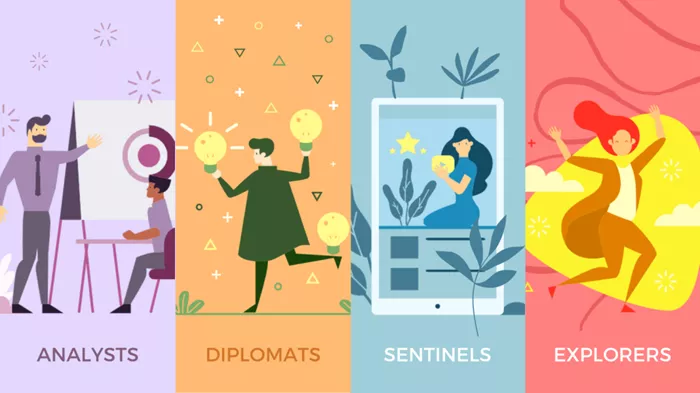
In recent years, the Myers-Briggs Type Indicator (MBTI) has transformed from a corporate HR tool into a cultural phenomenon. Once used primarily for self-assessment in professional or personal development contexts, MBTI now functions as an identity marker for Gen Z. Social media users openly display their MBTI types in bios, engage in debates about personality traits, and even assign MBTI classifications to fictional characters, celebrities, and tech products.
This surge in popularity has not gone unnoticed by marketers. Brands around the world are increasingly incorporating MBTI into their campaigns to capture consumer attention and drive engagement.
Global Brands Capitalize on MBTI Craze
In Japan, convenience store chain 7-Eleven launched “MyBTI” gummies, creating a marketing campaign that required customers to purchase multiple packets to complete their collection of MBTI personality types. This tactic not only boosts sales but also generates social media buzz.
Similarly, in Thailand, plush toys such as Care Bears have become top souvenirs for Chinese tourists, who select items aligned with their MBTI profiles.
South Korean brands like Jeju Beer and Supreme Heart integrate MBTI into product promotions, while K-pop idols further amplify the trend by revealing their types on popular variety shows. Angela Sy, CEO of Chinese branding agency The 25s, explains that in South Korea, this strategy enhances brand engagement through celebrity endorsements and television programming, making MBTI marketing both “cute” and culturally relevant.
MBTI in Automotive and Digital Marketing
The Centre of Excellence from Omnicom Media Group (COE@OMG) recently highlighted MBTI as a growing trend in automotive marketing for 2025. Vehicles are now being associated with specific personality types, positioning MBTI alongside tactics like nostalgic storytelling, influencer marketing, and AI-driven campaigns. Social media discussions around MBTI, such as debates on whether an INTJ would prefer a Tesla or a Porsche, increased by 55% year-on-year in 2024, according to Omni Social.
Connie Luo of COE@OMG notes that such organic conversations allow brands to build cultural value and potentially transform into viral content. MBTI provides marketers with a quick way to resonate with younger audiences, fostering engagement and brand storytelling.
Opportunities and Limitations
Despite its popularity, MBTI-driven marketing presents challenges. Oversimplification and rigid categorization can alienate consumers, particularly Gen Z, who value individuality and resist being confined to labels. Luo warns of the “tyranny of labels,” emphasizing that campaigns should treat MBTI as a conversation starter rather than a fixed framework.
Innovative strategies, such as China’s 5K Marketing Matrix, integrate MBTI into dynamic storytelling models, linking consumer interactions across sales, social media, and advertising. By aligning personality types with product attributes, brands can create narratives that bridge rational decision-making and emotional resonance.
Conclusion
Experts caution that MBTI marketing often functions as a short-term engagement tool rather than a long-term growth strategy. Sy notes that while MBTI can generate quick shifts in brand tone and appeal, its lack of data-driven rigor limits its ability to sustain community building or measurable business impact. Nonetheless, the popularity of MBTI among Gen Z remains clear: it provides a framework for self-awareness, identity expression, and social engagement, making it a potent, if temporary, marketing catalyst.
Related topics
- Government Layoffs Disrupt Essential Mental Health Services and Disease Control
- NIH Grant Supports Innovative Research on Hippocampus for Brain Health
- Younger Adults Show Parkinson’s Associations With Fine Particulate Matter
