
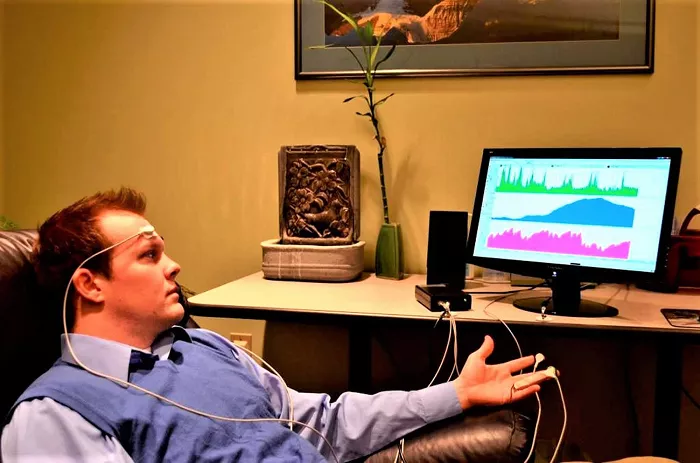
Biofeedback is a therapeutic technique that empowers individuals to gain conscious control over certain involuntary bodily functions, such as heart rate, skin temperature, and blood pressure. The foundational idea is that by utilizing the power of the mind and receiving real-time information about the body’s internal state, one can learn to influence their physiology and improve their health.
This drug-free therapy is used to help prevent or treat various conditions, including migraines, chronic pain, incontinence, and high blood pressure. The process enables a person to develop greater self-awareness and self-regulation skills for better health management.
Exploring the Mechanisms and Equipment Used in Biofeedback Sessions
During a biofeedback session, sensors or electrodes are attached to the skin to monitor specific physiological activities. These sensors are connected to a monitoring device that provides immediate visual or auditory feedback about bodily functions, such as muscle tension, brainwave activity, heart rate, and skin temperature.
When a person is under stress, these functions change involuntarily; for instance, heart rate accelerates, muscles tighten, and breathing becomes rapid. The monitoring device displays these stress responses, allowing the individual to see or hear them in real time. This instant feedback loop helps individuals learn how their thoughts and emotions directly affect their body.
Practicing Relaxation Techniques to Achieve Physiological Control
A biofeedback therapist guides individuals through various relaxation exercises to help them learn to control their physiological responses.
These exercises are finely tuned during sessions based on the feedback received. Common techniques include deep breathing exercises, which can slow heart rate; progressive muscle relaxation, which involves systematically tensing and then releasing muscle groups; guided imagery, that uses calming mental images to focus attention and promote relaxation; and mindfulness meditation to acknowledge and release negative thoughts.
The goal is to practice these techniques to lower heart rate, reduce blood pressure, and alleviate muscle tension with the aid of the feedback.
Identifying the Different Types of Biofeedback and Their Applications
Several distinct types of biofeedback are used to monitor different physiological functions, each suited for specific conditions. Electromyography measures muscle tension and is commonly used for back pain, headaches, anxiety, and muscle retraining.
Thermal biofeedback monitors skin temperature and is applied for migraine headaches and Raynaud’s disease. Neurofeedback, or EEG, measures brain wave activity and is utilized for ADHD and epilepsy. Electrodermal activity monitors sweating and is helpful for pain and anxiety. Heart rate variability biofeedback measures heart rate and is used for anxiety, asthma, COPD, and irregular heart rhythms.
Recognizing the Wide Range of Conditions Treated with Biofeedback
Biofeedback therapy offers benefits for a diverse array of health issues. It is particularly effective for chronic pain by helping individuals identify and relax tense muscles in conditions like back pain and fibromyalgia. For headaches, including migraines, it is one of the most well-researched applications, effectively reducing frequency and severity by addressing muscle tension and stress.
It is also widely used for anxiety disorders by increasing awareness of the body’s stress responses. Incontinence can be improved through pelvic floor muscle training with biofeedback. While evidence for hypertension is mixed, it can contribute to modest blood pressure reduction. Other treated conditions include ADHD, COPD, injury recovery, asthma, and rheumatoid arthritis.
Initiating Biofeedback Therapy and Finding a Qualified Provider
To begin biofeedback therapy, individuals should first consult with a healthcare provider, such as a primary care physician or neurologist, to discuss if it is a suitable option. A qualified biofeedback practitioner, such as a psychiatrist, psychologist, or general practitioner with specialized training, should be selected.
Prospective patients can contact professional organizations like the Association for Applied Psychophysiology and Biofeedback to find certified providers in their area. It is important to ask about the therapist’s experience with specific conditions, their certification, and the estimated number of sessions required; typically, improvements may be seen within ten sessions.
Related topics
