
A novel urine-based test has demonstrated 91 percent accuracy in detecting prostate cancer, offering a potential alternative to invasive biopsies. The test identifies three protein biomarkers—TTC3, H4C5, and EPCAM—linked to prostate cancer in urine samples.
In validation studies, the test correctly identified cancer in 91 percent of cases and accurately ruled out healthy individuals 84 percent of the time.
Senior study author Ranjan Perera, director of the Center for RNA Biology at Johns Hopkins All Children’s Hospital and professor of oncology and neurosurgery at Johns Hopkins University School of Medicine, described the test as “a promising, sensitive, and specific noninvasive diagnostic tool for prostate cancer.”
Perera added: “It has the potential to accurately detect prostate cancer, reduce unnecessary biopsies, improve diagnostic accuracy in PSA-negative patients, and serve as the foundation for both laboratory-developed and in vitro diagnostic assays.”
The research analyzed 1,396 urine samples in two phases—341 in the development phase and 1,055 in validation. Biomarkers were detected in patients prior to prostate-removal surgery but were nearly absent afterward, confirming their prostate origin.
The test achieved an area under the curve (AUC) of 0.92, where 1.0 represents perfect performance, and maintained accuracy in 78.6 percent of cases during development and 85.7 percent in PSA-negative patients during validation. It also distinguished prostate cancer from benign conditions such as prostatitis and benign prostatic hyperplasia, with an AUC of 0.89.
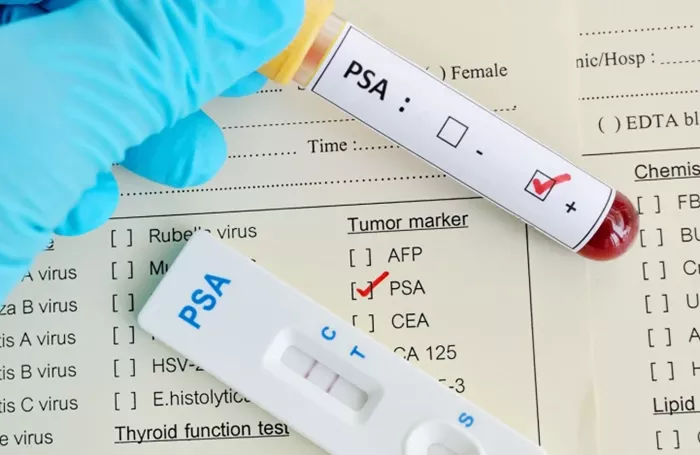
Currently, PSA blood tests measure a protein produced by both cancerous and non-cancerous prostate tissue. Levels above 4.0 nanograms per millilitre typically prompt a recommendation for a biopsy, a procedure involving tissue sampling with needles. The new urine-based test detected cancer even when PSA levels were normal.
Vipul Patel, director of urologic oncology at AdventHealth Cancer Institute in Florida, said: “This test has the potential to improve diagnostic accuracy for prostate cancer, reduce unnecessary interventions, and allow early treatment for those who need it. I advocate for further study and development of these biomarkers on behalf of physicians and patients worldwide.”
YOU MAY ALSO LIKE
PSA Test Key to Smarter Prostate Cancer Screening, Experts Say
PSA Test: Experts Highlight Importance of Prostate Cancer Screening
Free Prostate Exam and PSA Test Offered in Douglas on Sept. 11
