
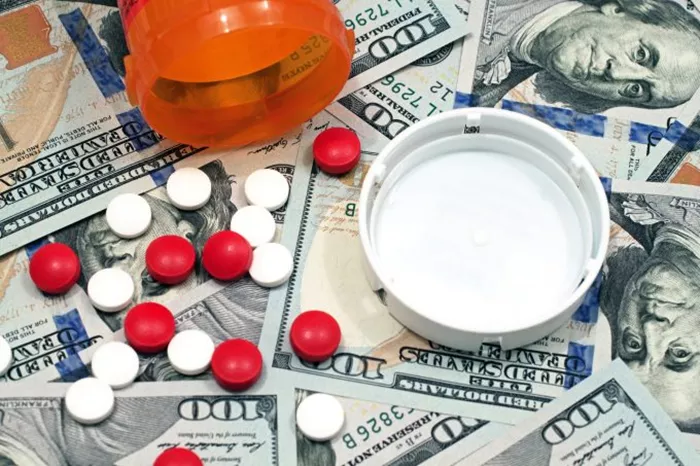
President Donald Trump is weighing steep tariffs on imported pharmaceuticals, a move he argues will bring drug manufacturing back to the United States but which experts warn could lead to higher prices and potential shortages.
The proposal follows a recent trade deal between U.S. and European leaders that set a 15% tariff on certain European imports, including medicines. Trump has signaled he may go further, threatening duties of up to 200% on pharmaceuticals produced outside the country.
“This is an industry going from zero tariffs to the potentiality of 200%,” said Maytee Pereira, a partner at PwC.
Risk of Higher Prices for Consumers
Trump has long promised to lower drug costs for Americans. But health economists caution that tariffs could have the opposite effect. They may disrupt global supply chains, squeeze generic drugmakers with already thin margins, and ultimately drive up prescription prices.
“A tariff would hurt consumers most of all,” wrote Diederik Stadig, a healthcare economist at ING. “They would feel the inflationary effect directly at the pharmacy and indirectly through higher insurance premiums,” with the greatest impact on seniors and low-income households.
Analysts estimate that even a 25% tariff could increase U.S. drug prices by 10% to 14% once stockpiles are depleted.
Stockpiling and Delays in Impact
Trump has indicated the tariffs may be delayed by up to 18 months, giving companies time to shift manufacturing or stockpile drugs. Analysts from Leerink Partners and Jefferies noted that most pharmaceutical companies have already increased imports, with inventories that could last until at least 2027.
Still, many expect any eventual tariff to be far lower than 200% and possibly include exemptions for critical or low-cost generics.
National Security and Supply Chain Dependence
The administration is also reviewing the national security risks of relying heavily on foreign drug imports. The U.S. trade deficit in pharmaceuticals reached nearly $150 billion last year, with much of the supply chain tied to China and India.
“During COVID-19, countries kept medicine for themselves,” said Brookings Institution analyst Marta Wosińska. “It showed how vulnerable we are when supply chains are abroad.”
Trump’s plan leans on Section 232 of the Trade Expansion Act, which allows tariffs to protect national security. While the Biden administration used targeted tariffs on medical devices such as syringes, Trump envisions broader measures to revive U.S. pharmaceutical manufacturing.
Industry Investment and Challenges
Some drugmakers are already expanding operations in the U.S. Roche has pledged $50 billion to grow its U.S. presence, while Johnson & Johnson plans to invest $55 billion over four years, aiming to supply the domestic market entirely from U.S. sites.
Yet building pharmaceutical plants is costly and time-intensive. Moreover, many drugs still rely on imported ingredients: 97% of antibiotics, 92% of antivirals, and 83% of popular generics contain at least one foreign-sourced active ingredient, according to the American Action Forum.
“The only way to truly protect yourself from the tariffs would be to build the supply chain end to end in the United States,” said Pereira.
Pressure on Generic Drug Market
Generic manufacturers, which account for 92% of U.S. retail and mail-order prescriptions, are most at risk. With slim margins, some may exit the U.S. market rather than absorb tariff costs, potentially leading to shortages of essential medicines.
“These markets are not very resilient,” Wosińska warned. “If there’s a shock, it’s hard for them to recover.”
She argued that tariffs alone are unlikely to spur generic drugmakers to relocate production to the U.S. without additional government financing.
“In an ideal world, we would be making everything important here,” Wosińska said. “But it costs a lot of money. We offshored so much to keep drugs inexpensive. If we want to reverse that, we’ll need to redesign the system—and decide how much we’re willing to spend.”
YOU MAY ALSO LIKE
Former CDC Directors Warn RFK Jr.’s Policies Endanger U.S. Health
Trump Presses Pharma Firms to Disclose Covid Drug Success Data
