
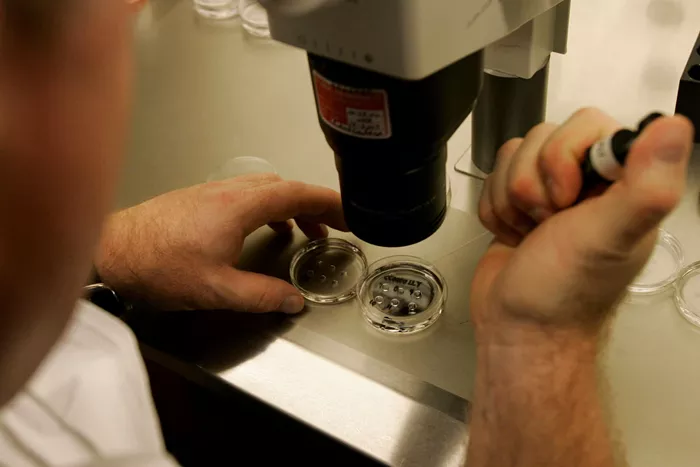
Scientists are calling for older women undergoing IVF on the NHS to have the option to screen embryos for chromosomal conditions, including Down’s syndrome, before implantation.
A trial led by King’s College London, King’s Fertility, and King’s College Hospital NHS Foundation Trust suggests that allowing women over 35 to “screen out” embryos with abnormal chromosome numbers could help them “conceive faster.”
The study used preimplantation genetic testing for aneuploidy (PGT-A), which identifies embryos with missing or extra chromosomes. Children with conditions such as Down’s syndrome or Patau’s syndrome have 47 chromosomes instead of the typical 46.
In the pilot trial, 100 women aged 35 to 42 enrolled in King’s Fertility’s program, with half receiving PGT-A tests. All embryos flagged as aneuploid were excluded from transfer.
King’s College researchers highlighted that current NICE guidance does not recommend routine use of PGT-A, often forcing women to pay privately or forgo testing altogether.
However, the Human Fertilisation & Embryology Authority (HFEA) cautions that the procedure may harm embryos or produce inaccurate results, potentially preventing successful pregnancies or leading to misdiagnoses.
Concerns over false positives have surfaced earlier this year. Two couples reported terminating pregnancies after being told prenatal tests indicated severe chromosomal or genetic conditions, only to learn later that the babies were healthy.
One couple was misinformed that their daughter would have Patau’s syndrome, a condition with a high infant mortality rate, before a follow-up scan revealed no abnormalities. Another couple terminated after a consultant predicted a life-limiting condition that post-mortem testing later disproved.
The debate raises pressing questions about balancing new genetic technologies with ethical considerations and patient safety on the NHS.
