
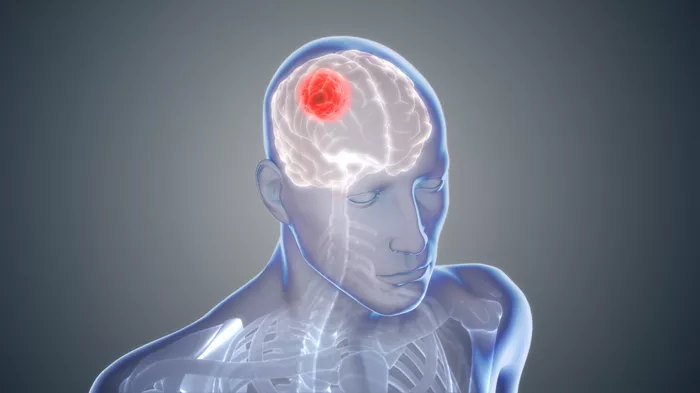
Researchers at the University of Sydney have uncovered a detailed “pain map” in the human brainstem, showing how the brain controls pain differently depending on where it occurs in the body. The discovery, published in Science, could help develop safer, more targeted alternatives to opioid-based pain relief.
Using one of Australia’s few ultra-powerful 7-Tesla MRI scanners, the team found that two regions of the brainstem—the periaqueductal grey (PAG) and the rostral ventromedial medulla (RVM)—activate in distinct ways during placebo pain relief. Upper areas responded more strongly to facial pain, while lower areas controlled pain in the arms and legs.
“This is the first time we’ve seen such a precise and detailed pain map in the human brainstem,” said lead author Dr. Lewis Crawford, research fellow at the Brain and Mind Centre. “It shows us that the brain doesn’t just switch off pain everywhere—it targets relief to the specific part of the body that’s hurting.”
The study involved 93 participants who were conditioned to believe a placebo cream relieved heat pain. Even when the same pain stimulus was later applied without adjustment, up to 61 percent reported less discomfort in the area where the cream had been used—demonstrating a strong placebo effect.
Researchers say the findings not only highlight a spatially organized pain-control system but also point to non-opioid mechanisms. Instead of relying on the brain’s central opioid pathways, the study identified activity in the lateral PAG, which may be linked to cannabinoid signaling.
“Opioid-based relief typically affects the whole body, but what we found suggests cannabinoids could play a role in localized, non-opioid pain control,” Dr. Crawford said.
Senior author Professor Luke Henderson called the results a “blueprint” for designing more precise therapies. “If we know exactly where pain relief is happening in the brain, we can target those areas and assess whether treatments are working where they should,” he said.
Experts believe the research could transform chronic pain management by enabling therapies that are both more personalized and less dependent on opioids.
