
With a strong family history of prostate cancer, Jody Fuller knew the importance of annual screenings. At 45, his elevated prostate-specific antigen (PSA) levels led to further testing, an MRI, and a biopsy. Six of twelve samples returned positive for cancer, despite the absence of symptoms.
“I knew my risk was high since both my dad and grandfather had prostate cancer,” Fuller said.
He underwent prostate removal surgery in May 2022. But within a year, his PSA levels rose again, signaling a recurrence. Seeking specialized care, Fuller and his wife, Sarah, traveled from Charleston, West Virginia, to Houston’s MD Anderson Cancer Center in May 2024.
A Complex Case with Added Health Risks
Pathology reports revealed a high-risk Gleason score of 9. Fuller’s treatment options were complicated by his history of ulcerative colitis and prior colon surgery, which made traditional radiation risky.
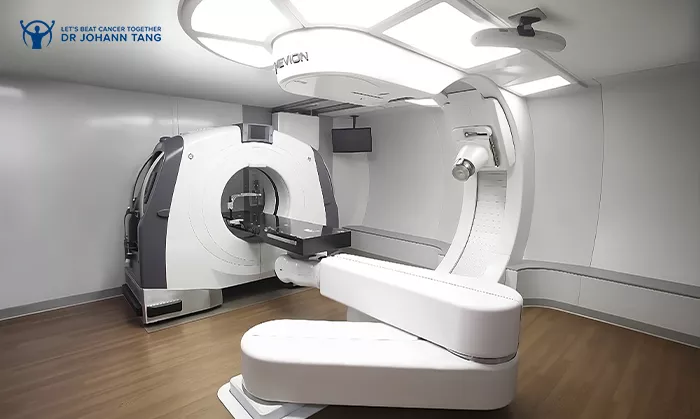
At MD Anderson, his care team, led by medical oncologist Dr. Ana Aparicio and radiation oncologist Dr. Ryan Park, recommended hormone therapy paired with proton therapy. This advanced form of radiation targets cancer cells precisely while limiting damage to surrounding healthy tissue.
Targeted Treatment Without Added Complications
Fuller began hormone therapy in June, followed by six weeks of proton therapy in August 2024. Despite expected side effects from hormone therapy, such as fatigue and hot flashes, he avoided additional complications from radiation.
“Dr. Park gave me confidence and ensured every scan was accurate to protect the areas affected by my prior surgeries,” Fuller said. “The team at the Proton Therapy Center made me feel at home from start to finish.”
While in Houston, Fuller and his wife dubbed their stay a “radiation vacation,” balancing treatment with outings to sporting events, concerts, and museums.
Advocate for Early Screening and Awareness
With a 26-year career as a pharmacist, Fuller now uses his experience to educate patients about the value of prostate screenings and early detection.
“Don’t ignore symptoms,” he advises. “Early detection gives you the best chance when the disease is most curable.”
Married since age 19, Fuller and his wife have three adult sons, all pursuing careers in medicine. Inspired by their father’s journey, one is considering urology.
Fuller continues regular PSA checks every three months and remains cancer-free. He credits his wife’s support and the expertise of MD Anderson with giving him a second chance.
“I’m grateful for the team that treated me without adding new side effects,” he said. “They saved my life.”
