
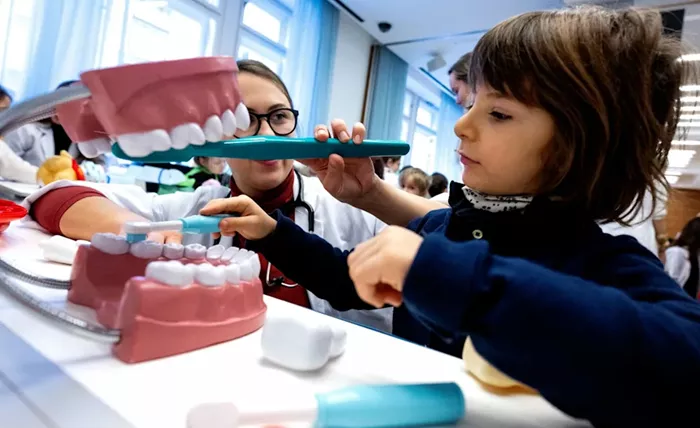
Two of the world’s leading dental researchers say most people are brushing their teeth the wrong way — and the consequences may be more serious than many realize.
Dagmar Else Slot, a dental hygienist, and Fridus van der Weijden, a dentist, have spent 15 years developing what they hope will become the definitive science-based guide to oral hygiene.
The Dutch duo, both professors at the Academic Centre for Dentistry in Amsterdam, have published more than 100 studies on dental health and continue to analyze thousands more as they refine their recommendations.
“Everybody brushes their teeth, but almost no one does it properly,” Slot said. “In nearly 100% of cases, there’s room for improvement.”
A Science-Based Dental Guide
Slot and van der Weijden’s work addresses common patient questions: Which toothbrush is most effective? How long should you brush? Does mouthwash actually prevent cavities? The researchers aim to give evidence-based answers rather than opinions.
The need is clear. In the U.S., about 40% of adults over 30 have gum disease, according to the Centers for Disease Control and Prevention (CDC). The National Institutes of Health reports that 90% of adults between 20 and 64 have experienced tooth decay.
Misinformation on Fluoride
Experts warn that social media trends — such as “oil pulling” or avoiding fluoride — can worsen oral health. Fluoride, endorsed by the American Dental Association, remains a critical defense against cavities. Proposals to ban fluoride in some U.S. communities could increase dental problems, particularly among children.
The Cost of Poor Dental Health
Dental issues are not just painful; they’re expensive. The CDC recorded 2.1 million emergency room visits for dental problems in 2017. In 2021, Americans who saw a dentist spent an average of $887 each on care, and untreated oral disease costs the U.S. economy nearly $46 billion annually in lost productivity. Gum disease has also been linked to heart disease, diabetes and dozens of other chronic conditions.
Best Practices for Brushing and Beyond
While Slot and van der Weijden continue their research, they and U.S. dental experts shared current recommendations:
Use an electric toothbrush for two minutes. Soft bristles are best, and built-in timers help ensure thorough cleaning.
Apply a pea-sized amount of toothpaste. Too much foam can mask gum bleeding, an important warning sign. Fluoride toothpaste is strongly recommended.
Consider a second small brush. A child-sized toothbrush can help reach back teeth more effectively.
Use interdental brushes instead of relying on floss. Studies show they reduce gum inflammation better than floss.
Clean between teeth before brushing. Removing debris first allows the toothbrush to clean more effectively.
Be cautious with mouthwash. It should supplement, not replace, interdental cleaning. Alcohol-based rinses may worsen tooth decay in people with dry mouths.
Conclusion
The researchers expect to spend another three years finalizing their comprehensive guide. In the meantime, they emphasize that improving daily oral hygiene is one of the simplest — and most cost-effective — ways to protect overall health.
READ MORE
First U.S. Human Case of Flesh-Eating Screwworm Confirmed
RFK Jr.’s mRNA Funding Cuts Threaten Progress on Cancer Vaccines
