
Melanoma remains one of the most common cancers in the United States, with the American Cancer Society projecting more than 104,000 new cases and 8,400 deaths in 2025. But a promising breakthrough — an mRNA vaccine that could prevent recurrence — may now face delays following federal funding cuts.
Researchers at Moderna and Merck are developing an experimental vaccine designed to reprogram the immune system to detect and destroy cancer cells. Early data on their melanoma candidate, mRNA-4157/V940, show it can cut the risk of recurrence or death by nearly half. Phase 3 trials launched in 2023, with broader studies under way in other cancers, including pancreatic, lung, and bladder.
HHS Funding Cuts Spark Concern
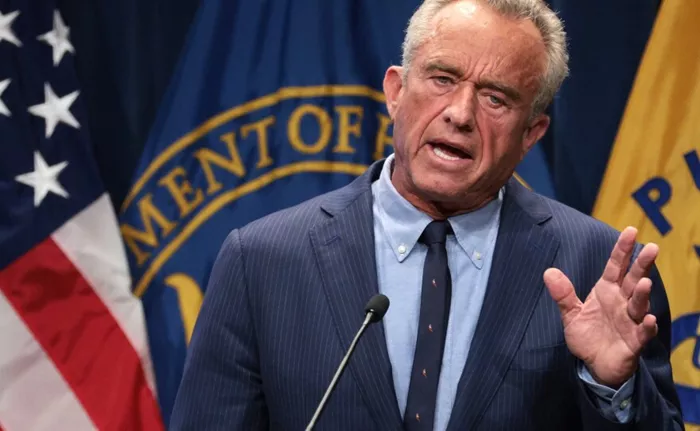
The project’s timeline could be slowed after the Department of Health and Human Services (HHS) canceled $500 million in federal grants for mRNA vaccine research. Secretary Robert F. Kennedy Jr. said the move reflects waning public trust in the technology, though he voiced support for its use in oncology.
Experts warn that the cuts — which affect infectious disease and viral research but not cancer directly — could still disrupt progress by weakening the broader mRNA research infrastructure.
“These cuts and the accompanying rhetoric are a step backward, threatening both research momentum and our ability to combat diseases effectively,” said Jerome Adams, former U.S. surgeon general.
How mRNA Vaccines Work
Unlike traditional vaccines that introduce weakened viruses, mRNA vaccines deliver genetic instructions telling cells how to produce proteins that train the immune system to respond. The approach proved successful during the COVID-19 pandemic with vaccines from Pfizer-BioNTech and Moderna.
“DNA is like a restaurant, and mRNA is the recipe,” explained Dr. Jeff Coller, a professor of RNA biology at Johns Hopkins University. “It tells the cell what dish to make.”
The same principle is now being applied in oncology. Moderna’s vaccine sequences each patient’s tumor to identify unique proteins, then engineers a personalized treatment. “We’re creating a unique product for each person’s cancer and sending it back to them,” said Dr. Kyle Holen, head of oncology development at Moderna.
Risks of a Narrow Research Focus
While Kennedy has maintained support for cancer applications, scientists argue that progress in oncology depends on decades of government-funded basic research across many fields.
“You can’t have your cake and eat it too,” said Coller, warning that cutting mRNA studies for infectious diseases will inevitably slow cancer research as well.
Adams echoed the concern, stressing that mRNA vaccine production relies on shared expertise, infrastructure, and manufacturing capacity. “By defunding infectious disease research, the administration is creating a false dichotomy,” he said. “The mixed messages risk undermining public trust and scientific progress.”
Despite uncertainty around funding, Moderna has announced plans to bring its melanoma vaccine to market in Japan by 2027. But the company’s decision to cancel construction of a new mRNA facility in the country could delay that timeline.
“This will be one of the first vaccines to show real benefit in cancer patients,” Holen said. “It represents a critical step forward in changing how we fight cancer.”
READ MORE
FDA Halts U.S. Use of Ixchiq Chikungunya Vaccine
NIH Backs Whole-Virus Vaccines as Experts Question the Shift
Denied Coverage? 7 Strategies to Win Health Insurance Appeals
