
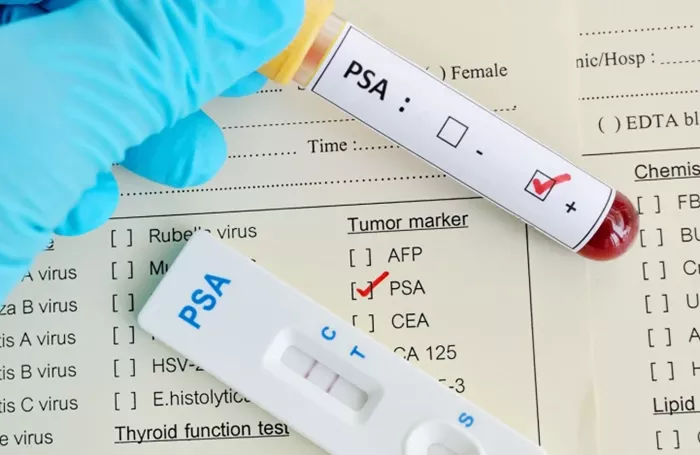
A personal dilemma, sparked by former U.S. President Joe Biden’s recent prostate cancer diagnosis, has reignited discussions around the long-debated PSA test for prostate cancer.
For years, the author hesitated to address the topic due to its personal stakes, but Biden’s diagnosis prompted reflection on the “Shakespearean dilemma” facing many men: to screen or not to screen.
Data highlights the test’s widespread use despite uncertainty. A 2006 study in the Canadian Journal of Public Health found 47.5% of Canadian men over 50 had undergone a PSA test, leaving 52.5%—including the author—unscreened.
More recently, a 2023 U.S. National Cancer Institute report noted 38% of American men had a PSA test within the year. Yet medical guidance remains divided.
The author’s family doctor cautioned against the test, citing its lack of definitive results and potential harms from follow-up treatments. To clarify, the doctor referenced a report by the Canadian Task Force on Preventive Health (CTFPHC), an independent expert body that develops national preventive health guidelines.
Its findings were stark: “The Canadian Task Force on Preventive Health recommends against screening for prostate cancer with the PSA test,” arguing that “potential small benefits” are “outweighed” by significant harms from screening and treatment.
Analyzing a hypothetical group of 1,000 men aged 55–69 screened over 13 years, the CTFPHC found minimal differences in mortality: 5 in 1,000 screened men would die from prostate cancer, compared to 6 in 1,000 unscreened men.
Among those screened, 720 would test negative, while 178 (nearly 20%) would receive “false positives,” requiring unnecessary biopsies. Of the 102 diagnosed with prostate cancer, about one-third (33) would never develop symptoms or die from the disease—but due to uncertainty, they would likely seek treatment.
Treatments carry steep risks: 11–21% of treated men face short-term complications, and 13–44% experience long-term erectile dysfunction. In the end, screening 1,000 men would save only one life from prostate cancer.
The U.S. Preventive Services Task Force offers slightly more flexibility, advising men aged 55–69 to discuss “potential benefits and harms” with doctors and make individual decisions. Both Canadian and U.S. guidelines discourage PSA testing for men over 70.
This ambiguity stands in contrast to clear recommendations for breast cancer screening (with recent pushes to lower the age) and colorectal cancer screenings via colonoscopies.
Yet prostate cancer, which kills about 5,000 Canadian men yearly and ranks as the third leading cancer death in men, lacks unified medical consensus on PSA testing. This fragmentation risks inconsistent diagnoses and uneven care, even as doctors urge patients to consult them.
The author emphasizes that avoiding the test is not mandatory—early detection can enable successful treatment. However, patients must weigh serious post-treatment complications. Ultimately, the choice hinges on personal risk assessment. After reviewing the evidence, the author has opted to follow their doctor’s advice and forgo the test. The question remains: what will you decide?
READ MORE
