
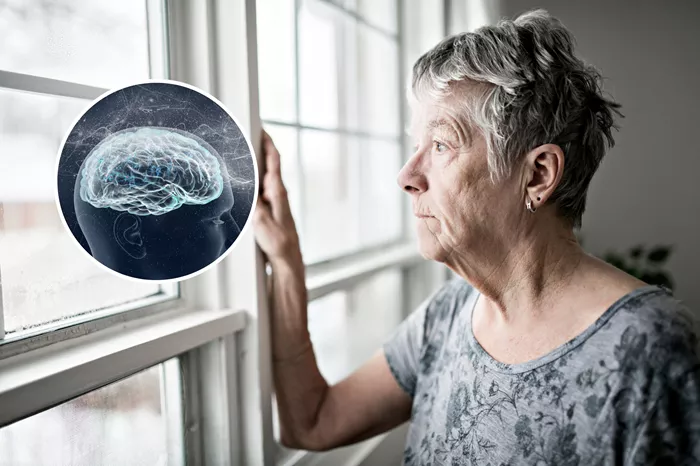
New research from Northwestern University is shedding light on a unique group of older adults known as “SuperAgers”—individuals over 80 whose memory functions remain comparable to those of people 20 to 30 years younger.
A new analysis, published in Alzheimer’s & Dementia: The Journal of the Alzheimer’s Association, draws on 25 years of data from the Mesulam Center for Cognitive Neurology and Alzheimer’s Disease, offering deeper understanding into what makes these exceptional minds tick.
One such SuperAger is 85-year-old Sel Yackley, a Chicago resident originally from Turkey. She maintains a packed schedule that includes jewelry-making, choir singing, community service, book clubs, gym workouts, and knitting for the homeless—all while averaging over seven hours of sleep per night. Her vitality and sharp memory challenge the stereotype that aging inevitably leads to cognitive decline.
“We’re going to be role models for people who are getting older,” Yackley said. “Take good care of your health, eat right, and be sociable.”
Yackley is among nearly 300 individuals who have participated in the Northwestern University SuperAging Program (NUSAP) since its inception in 2000. The study, spearheaded by Dr. M. Marsel Mesulam, explores how and why some older adults defy the typical cognitive aging process.
The Role of Genetics—and Determination
While genetics may play a role—Yackley’s parents lived into their late 80s—experts say lifestyle and attitude are also crucial. “I think it’s partly your determination to live a long life and your activities that enable you to do so,” Yackley said.
Tamar Gefen, associate professor of psychiatry and behavioral sciences and co-author of the study, highlights the deep sense of connection many SuperAgers maintain—whether to people, places, passions, or purpose.
“You don’t see a lot of detached SuperAgers,” Gefen noted.
However, becoming a SuperAger isn’t something people can simply will into existence. With more than 7 million Americans currently living with Alzheimer’s—projected to grow to 13 million by 2050—the odds are daunting. About one in nine people over 65 have Alzheimer’s disease, and the risk at age 45 is one in five for women and one in 10 for men.
SuperAgers, it appears, may be genetically shielded. Many do not carry known Alzheimer’s risk genes like APOE4, which, in two copies, can raise Alzheimer’s risk to 60% by age 85 among those of European descent.
“What I want to know,” Gefen said, “is whether SuperAgers carry protective genes—perhaps tied to the immune system—that we could harness to protect others.”
Brains That Defy Aging
Some of the most revealing findings have come from brain autopsies of SuperAgers. Gefen and her colleagues have studied nearly 80 such brains, identifying notable differences from those of cognitively typical peers.
While levels of amyloid plaques—commonly targeted in Alzheimer’s treatments—were similar, SuperAger brains showed significantly fewer tau tangles, another hallmark of the disease.
This raises important questions about the focus of current Alzheimer’s treatments. “Are we really targeting the right factor if both groups have similar levels of amyloid?” Gefen asked.
SuperAgers also tend to have larger entorhinal neurons, essential for memory, and more von Economo neurons, which are associated with social behavior.
“These individuals may be born with structural protections,” Gefen said. “But we’re now investigating the molecular mechanisms to understand what keeps their brain cells resilient.”
A Legacy of Cognitive Strength
Dr. Timothy Chang, a neurologist at UCLA not involved with the study, emphasized the importance of understanding outlier populations like SuperAgers. “They can teach us a lot about how people—through genetics or lifestyle—may avoid neurodegenerative disease,” he said.
Yackley, who plans to donate her brain and body to science, finds meaning in her contributions to research. “Hopefully, maybe my heart or my kidneys can be used for transplanting,” she said. “I don’t want to be underground.”
Still looking ahead, Yackley hopes to live to 90. She tracks her daily steps—aiming for 4,200—and is currently working on a scrapbook of her life.
While SuperAgers are rare—only about 10% of initial study applicants met the criteria—101 individuals aged 81 to 111 are currently active in the program. Their backgrounds vary widely. Some indulge in vices, others have endured hardship, but they all share an awareness of their exceptional cognitive abilities.
“These SuperAgers know they have a gift,” Gefen said.
READ MORE
