
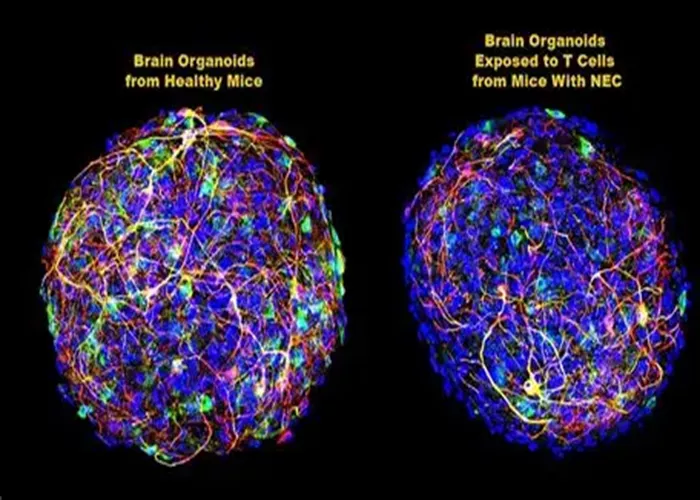
A team of scientists at Johns Hopkins University has achieved a significant milestone in neuroscience by developing a “whole-brain” organoid that integrates neural tissues from multiple brain regions alongside primitive vascular structures. Published in the journal Advanced Science, this breakthrough marks the first time researchers have successfully combined distinct brain region tissues into a functionally unified organoid, offering a powerful new tool for studying complex neurological and neuropsychiatric conditions such as autism, schizophrenia, and Alzheimer’s disease.
What Makes This Organoid Different?
Traditional brain organoids—laboratory-grown cell structures that mimic parts of the brain—typically model only single regions, such as the cerebral cortex or hindbrain. In contrast, the new “multi-region brain organoid” (MRBO) replicates a rudimentary whole brain, capturing interactions between different areas that are critical for understanding how diseases affect the brain as an interconnected system.
The team’s innovative construction process involved two key steps: first, generating neural cells from various brain regions (including the forebrain, midbrain, and hindbrain) and early vascular cells in separate cultures. These components were then assembled using a biocompatible “bio-glue” protein, which allowed the tissues to fuse and form functional connections as they developed. Over time, the merged organoid exhibited synchronized electrical activity and integrated neural network responses, mirroring the coordinated signaling seen in early brain development.
Key Features and Capabilities
MRBO closely mimics the cellular diversity of the human embryonic brain during early development, containing approximately 80% of the common neural cell types found in a developing brain. Its structure approximates that of a 40-day-old human fetal brain, making it an ideal model for studying early brain development processes.
Notably, the organoid also shows early signs of blood-brain barrier formation—a specialized membrane that controls the flow of substances between the blood and brain tissue. This feature is critical for drug screening, as it allows researchers to test how potential therapies interact with the brain’s natural protective mechanisms, a capability lacking in many existing models.
While significantly smaller than a human brain (housing 6–7 million neurons, compared to the hundreds of billions in an adult brain), MRBO fills a critical gap in neuroscience research. It provides the first human cell-based model that can simulate brain-wide interactions, a necessity for studying conditions that affect the entire brain rather than isolated regions.
Transforming Neurodisease Research and Drug Development
The potential impact of this technology is far-reaching, particularly in drug development. Currently, 96% of neuropsychiatric drug candidates fail in Phase I clinical trials, largely because animal models—long the standard for preclinical testing—often do not accurately replicate human brain biology. MRBO, by better simulating human brain development and function, could drastically improve the efficiency of drug screening, reducing reliance on animal models and increasing the likelihood of identifying successful therapies.
“Conditions like schizophrenia and Alzheimer’s don’t target just one part of the brain—they disrupt connections across multiple regions,” explained the researchers. “By modeling these interactions from the earliest stages, we can gain earlier insights into disease origins and uncover entirely new therapeutic targets that were previously hidden.”
The development of the integrated “whole-brain” organoid by Johns Hopkins University represents a leap forward in neuroscience research. By combining multiple brain regions and vascular features, this model offers an unprecedented window into human brain development and disease. Its ability to simulate brain-wide interactions and blood-brain barrier formation could accelerate our understanding of complex neuroconditions and revolutionize the way we develop treatments—ultimately bringing us closer to effective therapies for millions affected by neurological and neuropsychiatric disorders.
Related topics:
Insurance Coverage for BetterHelp: Mental Health Benefits
Language Anxiety Stop Millions of Americans From Traveling Abroad
